

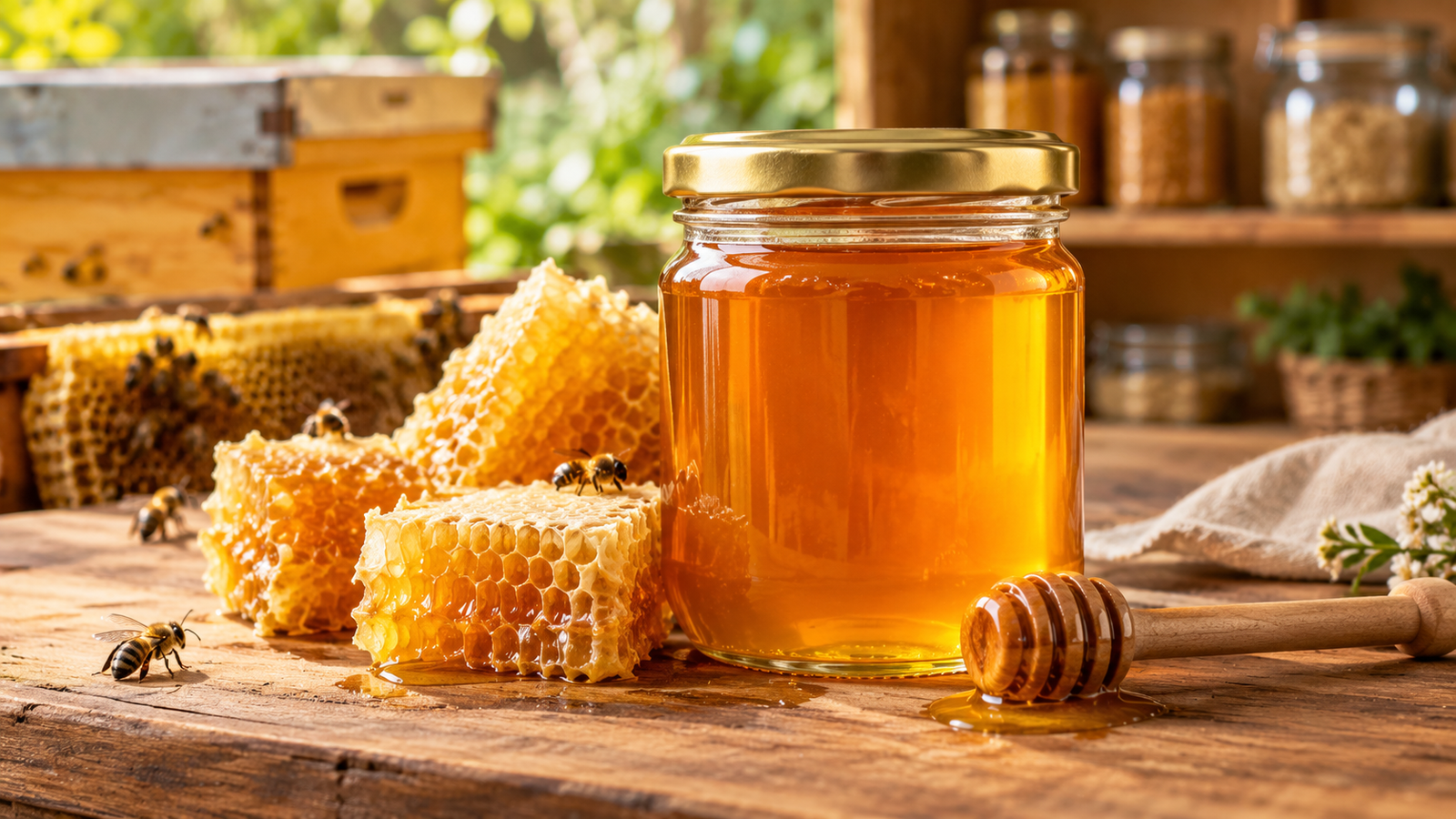
How long does honey last? Properly stored pure honey can remain usable for many years and potentially much longer. Honey is one of the most shelf-stable natural foods because its high sugar concentration, low available water, natural acidity, and antimicrobial properties make it difficult for many microorganisms to grow.
Unlike foods such as milk, fresh fruit, or meat, honey does not normally spoil quickly. Over time, however, it can crystallize, darken, thicken, or change in flavor and aroma. These changes do not necessarily mean the honey has gone bad.
The biggest threats to honey’s shelf life are moisture, contamination, excessive heat, and poor storage. When kept in a tightly sealed container in a cool, dry place, honey can retain its quality for an exceptionally long time.
How Long Does Honey Last?
Pure honey can last for years when stored properly, and under favorable conditions it can remain preserved for an exceptionally long period.
Commercial honey often has a best-before or best-by date printed on the container. This date does not necessarily mean that the honey suddenly becomes unsafe after that day. Honey’s quality may gradually change with age, while its natural composition gives it unusually good preservation properties.
The exact shelf life depends on several factors, including:
- The moisture content of the honey
- How well the container is sealed
- Exposure to humidity
- Storage temperature
- Exposure to light and heat
- Whether the honey has been contaminated
- Whether the honey contains additional ingredients
How long does honey last after opening?
Opened honey can still last for years if it is stored properly.
The most important thing is to prevent moisture and contaminants from getting into the jar. Always use a clean, dry spoon and close the container tightly after use.
If water or food particles enter the honey, its stability can be reduced and fermentation may eventually occur.
Why Does Honey Last So Long?
Honey’s remarkable shelf life comes from several characteristics of its natural composition.
1. Honey has low available water
Honey contains relatively little water compared with many foods. More importantly, much of the water in honey is unavailable to microorganisms because of its high concentration of sugars.
This low water activity makes it difficult for many bacteria and other microorganisms to grow.
2. Honey is naturally acidic
Honey is naturally acidic. Its relatively low pH creates an environment that is unfavorable to many microorganisms.
Acidity works together with honey’s high sugar concentration and low available water to help protect it from spoilage.
3. Honey contains natural antimicrobial compounds
Honey contains naturally occurring enzymes and other compounds that contribute to its antimicrobial properties.
One important enzyme is glucose oxidase. Under suitable conditions, this enzyme can contribute to the production of hydrogen peroxide, which has antimicrobial activity.
Together, these characteristics help explain why properly stored honey can remain stable for such a long time.
Does Honey Expire?
Honey does not usually have a short expiration period like many perishable foods.
However, it is more accurate to say that properly stored honey can remain usable for a very long time rather than assuming every jar will remain perfect indefinitely.
Honey’s quality can change as it ages. It may become darker, thicker, more crystallized, or develop changes in flavor and aroma.
A best-before date should therefore be considered alongside the honey’s storage conditions and physical condition.
Does Honey Go Bad?
Yes, honey can become unsuitable to eat, particularly if it is exposed to moisture or contamination.
Pure honey is highly resistant to spoilage, but it is not completely immune to poor storage.
The most common problem is excess moisture. Honey is hygroscopic, meaning it can absorb water from its surroundings. If enough moisture enters the honey, yeasts can become active and fermentation can occur.
Signs of fermentation or spoilage can include:
- Bubbles or foaming
- A sour smell
- An alcoholic or fermented odor
- An unusual sour or fermented taste
- Visible mold
- Other obvious signs of contamination
If honey shows clear signs of mold, fermentation, or contamination, it is safest to discard it.
Is Crystallized Honey Still Good?
Yes. Crystallized honey is generally still good to eat.
Crystallization is a natural process in which some of the sugars in honey form crystals. It does not mean that the honey has spoiled.
Some honey crystallizes quickly, while other varieties remain liquid for much longer. The rate of crystallization depends partly on the types and proportions of sugars present, as well as temperature and other characteristics of the honey.
Crystallized honey may become:
- Thick
- Grainy
- Creamy
- Firm
- Difficult to pour
These texture changes are normal and do not automatically indicate spoilage.
How to Turn Crystallized Honey Back Into Liquid
If you prefer liquid honey, you can gently warm the container in a warm-water bath.
Place the sealed container in warm water and allow the honey to gradually warm. Stirring can help distribute the heat and dissolve the crystals.
Avoid excessive or prolonged heating because high temperatures can affect honey’s flavor, aroma, color, enzymes, and other quality characteristics.
The goal is to warm the honey gently rather than expose it to unnecessary high temperatures.
How Long Does Raw Honey Last?
Properly stored raw honey can also last for many years.
Raw honey has not undergone the same degree of processing as many commercial varieties, and it may contain naturally occurring pollen, wax particles, and other small components.
These characteristics can affect its appearance and crystallization behavior, but they do not mean raw honey has a short shelf life.
Like other honey, raw honey should be protected from moisture, contamination, excessive heat, and prolonged exposure to poor storage conditions.
How Long Does Manuka Honey Last?
Manuka honey can also remain usable for a long time when stored properly.
Its shelf life depends on factors such as the product’s moisture content, packaging, storage conditions, and whether it has been contaminated.
For commercially packaged Manuka honey, follow the storage instructions and best-before information provided by the manufacturer.
How Should Honey Be Stored?
Proper storage is one of the most important ways to preserve honey for as long as possible.
1. Keep honey tightly sealed
Use a container with a secure lid.
A good seal helps prevent:
- Moisture
- Humidity
- Dust
- Food particles
- Other contaminants
- Unwanted odors
from entering the honey.
2. Store honey in a cool, dry place
A pantry or kitchen cupboard is generally suitable.
Avoid storing honey in areas with high humidity or frequent temperature changes.
3. Keep honey away from excessive heat
High temperatures can gradually affect honey’s quality.
Prolonged exposure to heat may cause honey to darken and can reduce some of its delicate flavors, aromas, enzymes, and other naturally occurring compounds.
Keep honey away from:
- Ovens
- Stoves
- Direct sunlight
- Hot appliances
- Other strong heat sources
4. Use clean, dry utensils
Always use a clean and dry spoon when removing honey from the container.
Introducing water, food particles, or other contaminants can reduce honey’s stability and potentially encourage fermentation.
What Is the Best Container for Honey?
A good honey container should be food-safe, clean, durable, and capable of forming a tight seal.
Glass containers
Glass is an excellent option for storing honey because it is non-reactive and does not normally affect honey’s flavor.
A tightly sealed glass jar can provide excellent protection from moisture and contamination.
Food-grade plastic
Food-grade plastic containers can also be suitable for honey storage, particularly for everyday use.
For longer-term storage, make sure the container is specifically suitable for food storage and can be securely sealed.
Stainless steel
Food-grade stainless steel can also be suitable for storing larger quantities of honey.
The key consideration is not simply the material but whether the container is clean, food-safe, and properly sealed.
Does Temperature Affect How Long Honey Lasts?
Yes. Temperature can affect honey’s quality, texture, color, and crystallization, even though honey is naturally resistant to spoilage.
High temperatures
Prolonged exposure to high temperatures can:
- Darken honey
- Change its flavor
- Reduce some natural enzymes
- Affect aroma
- Accelerate quality deterioration
For this reason, honey is best kept away from excessive heat.
Low temperatures
Cold temperatures can cause honey to become thicker and may encourage crystallization.
Crystallized honey is generally still safe to eat, but it can be less convenient to pour or spread.
Temperature fluctuations
Frequent changes in temperature are not ideal for long-term storage.
Stable storage conditions in a cool, dry location are preferable.
Does Honey Need to Be Refrigerated?
No, honey generally does not need to be refrigerated.
For most honey, storing it in a tightly sealed container at room temperature is sufficient.
Refrigeration can cause honey to become thicker and crystallize more quickly. This does not normally make the honey unsafe, but it can make it harder to use.
A cool, dry cupboard is usually a better storage location than the refrigerator.
Can You Freeze Honey?
Honey can be frozen, but freezing is generally unnecessary for normal household storage.
Properly sealed honey can usually be stored successfully at room temperature.
If honey is frozen, use an appropriate container and allow it to return gradually to a usable temperature before handling it.
For everyday storage, keeping honey sealed in a cool, dry place is normally sufficient.
Does Honey Change Color Over Time?
Yes. Honey can naturally become darker over time.
Color also varies considerably between different types of honey. Some varieties are very light, while others are deep amber or brown.
A darker color alone does not necessarily mean that honey has spoiled.
Storage temperature and age can also contribute to changes in honey’s color.
Does Honey Lose Quality Over Time?
Honey can undergo gradual quality changes during storage.
You may notice changes in:
- Color
- Flavor
- Aroma
- Texture
- Crystallization
High temperatures and prolonged storage can affect some of honey’s naturally occurring compounds.
This is one reason why proper storage matters even though honey has an exceptionally long shelf life.
Can You Eat Honey Past the Best-Before Date?
Often, honey can remain usable beyond its best-before date if it has been properly stored and shows no signs of spoilage.
A date printed on the container should not be viewed as proof that the honey becomes unsafe immediately afterward.
Instead, consider:
- How the honey has been stored
- Whether the container remained sealed
- Whether moisture entered the jar
- Whether the honey smells normal
- Whether there is visible mold
- Whether there are signs of fermentation
When in doubt about contaminated or spoiled honey, it is safer to discard it.
Can Honey Last for Decades?
Honey can remain remarkably stable for very long periods under favorable storage conditions.
Its low available water, acidity, high sugar concentration, and antimicrobial properties make it unusually resistant to microbial spoilage.
However, the fact that properly stored honey can last for an exceptionally long time does not mean every jar will remain edible indefinitely.
Moisture, contamination, processing, packaging, and storage conditions all matter.
What Makes Honey Spoil Faster?
Several conditions can reduce honey’s shelf stability or cause quality problems.
Moisture
Excess water is one of the biggest concerns because it can encourage fermentation.
Contamination
Dirty utensils, food particles, or other contaminants can introduce unwanted microorganisms.
Humidity
An improperly sealed container can absorb moisture from humid air.
Excessive heat
Heat can accelerate changes in color, flavor, aroma, and other quality characteristics.
Poor sealing
An open or loosely closed container provides greater opportunity for moisture and contaminants to enter.
How Can You Tell If Honey Has Gone Bad?
The following signs can indicate that honey is no longer in good condition:
Sour or fermented smell
A strong sour, alcoholic, or fermented odor can indicate fermentation.
Bubbles or foam
Unexpected bubbling or foaming may be a sign of fermentation.
Mold
Visible mold is a clear reason to discard the honey.
Unusual taste
A sharp, sour, alcoholic, or otherwise abnormal flavor may indicate fermentation or spoilage.
Unusual separation
Separation accompanied by bubbles, foam, or a fermented smell can indicate that something has gone wrong.
Important: Crystallization is different
Hardening or crystallization by itself is not evidence that honey has spoiled.
Frequently Asked Questions About How Long Honey Lasts
How long does honey last after opening?
Properly stored honey can last for years after opening. Keep it tightly sealed and protect it from moisture and contamination.
Does honey expire?
Honey has an exceptionally long shelf life, but it is better not to assume that every jar remains perfect indefinitely. Proper storage is essential.
How long does raw honey last?
Raw honey can remain usable for many years when properly stored in a sealed container away from moisture, contamination, and excessive heat.
Is crystallized honey bad?
No. Crystallization is a natural process and does not normally mean honey has spoiled.
Should honey be refrigerated?
Usually not. Honey is generally best stored in a tightly sealed container at room temperature in a cool, dry place.
Can old honey make you sick?
Properly stored honey is highly resistant to spoilage, but honey that has been contaminated or has clearly fermented should not be consumed.
Can honey last 100 years?
Honey can remain remarkably preserved for extremely long periods under favorable conditions. However, the condition of any particular jar depends on its moisture level, contamination, packaging, and storage history.
Why does honey crystallize?
Crystallization occurs when some of the sugars in honey form crystals. It is a natural process and does not mean the honey has gone bad.
Can you eat crystallized honey?
Yes. Crystallized honey is generally safe to eat and can be gently warmed if you prefer it in liquid form.
What is the best way to store honey?
Keep honey in a clean, food-safe, tightly sealed container in a cool, dry place away from excessive heat, sunlight, moisture, and contaminants.
Final Answer: How Long Does Honey Last?
So, how long does honey last?
Properly stored pure honey can last for many years and potentially much longer. Honey’s high sugar concentration, low available water, natural acidity, and antimicrobial properties make it one of the most shelf-stable foods.
Honey can change as it ages. It may crystallize, darken, thicken, or develop changes in flavor and aroma without necessarily being spoiled.
The most important thing is how the honey is stored. Keep it tightly sealed in a clean container, protect it from moisture and contamination, and store it in a cool, dry place away from excessive heat.
If honey develops mold, fermentation, bubbles, a sour or alcoholic smell, or another clear sign of contamination, it should not be eaten.
In short, honey can last for years when stored properly, and its remarkable stability is one of the reasons honey has been valued as a long-lasting natural food for centuries.
