

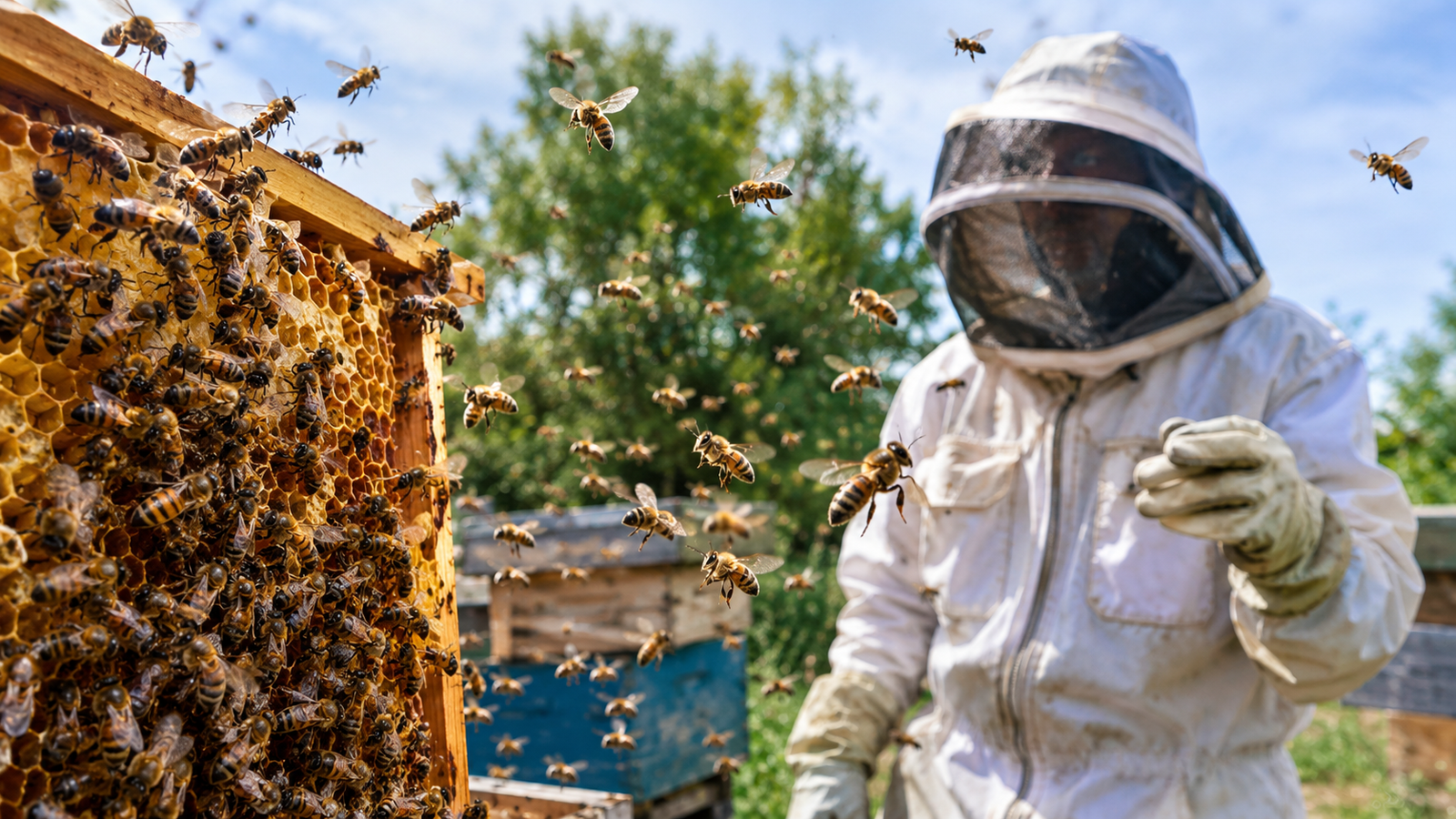
A bee sting is usually painful but harmless beyond temporary redness, swelling and itching. However, being stung by a large number of bees can cause life-threatening venom poisoning. In some people, even a single bee sting can trigger a severe allergic reaction called anaphylaxis, which can be fatal without immediate treatment.
So, how many bee stings are lethal?
There is no exact number that guarantees death. The risk depends on the person’s body weight, age, overall health, sensitivity to bee venom and the number of stings received. For a non-allergic adult, a severe poisoning risk is generally associated with hundreds of honey bee stings, although scientific estimates vary. Children can be seriously affected by substantially fewer stings because the same amount of venom represents a larger dose relative to their body weight.
Understanding the difference between venom toxicity and anaphylaxis is essential. These are two separate medical emergencies, and both can become fatal.
How Many Bee Stings Are Lethal to a Human?
The number of bee stings that can kill a person varies considerably. A person who receives hundreds of stings may develop severe venom poisoning, while someone with a serious bee venom allergy may experience a life-threatening reaction after just one sting.
A 2024 scientific review published in Frontiers in Immunology reports that a honey bee sting delivers approximately 140–150 micrograms of venom on average. The review discusses a theoretical median lethal dose of 2.8–3.5 milligrams of venom per kilogram of body weight.
Using those estimates, the researchers calculate that a non-allergic adult weighing approximately 60–70 kilograms could theoretically face a 50% fatality risk after roughly 1,000–1,500 honey bee stings.
However, this calculation should not be interpreted as a safe limit or a reliable prediction for an individual. Fatalities have been reported after approximately 200–500 stings, and other medical complications can occur at considerably lower sting counts.
Several factors influence the outcome:
- Body weight: A given amount of venom represents a larger dose per kilogram in a smaller person.
- Age: Infants and children have lower body weights and may be more vulnerable to extensive envenomation.
- Allergic sensitivity: A person with a serious venom allergy can develop anaphylaxis after one sting.
- Health conditions: Existing medical problems may increase the risk of complications.
- Number and location of stings: Extensive attacks, particularly stings involving the head, neck or mouth, can create additional dangers.
- Time to treatment: Delayed medical assessment can worsen the outcome of severe envenomation.
The important point is that sting counts are not dependable measures of survival. A person should never wait until reaching a particular number of stings before seeking medical attention.
How Many Bee Stings Can Kill an Adult?
For an adult without a serious bee venom allergy, hundreds of honey bee stings can cause dangerous venom exposure. At sufficiently high doses, bee venom can damage several organs and interfere with normal body functions.
However, there is no universal adult threshold.
Consider two adults who each receive 100 honey bee stings. One weighs 90 kilograms, while the other weighs 55 kilograms. Although they receive approximately the same number of stings, the smaller individual receives a greater venom dose relative to body weight.
Their medical outcomes may also differ because of age, existing health conditions, individual sensitivity and how quickly treatment begins.
This is why a sting count should not be used to determine whether an adult is safe.
What happens when an adult receives hundreds of stings?
When many honey bees sting a person, the venom accumulates in the body. Its components can damage cell membranes, disrupt blood cells and injure muscle tissue.
As the injury becomes more extensive, the kidneys may struggle to remove substances released from damaged cells. This can contribute to acute kidney injury.
Severe envenomation may also cause:
- Muscle breakdown (rhabdomyolysis).
- Destruction of red blood cells (hemolysis).
- Abnormal blood clotting.
- Liver injury.
- Cardiovascular complications.
- Acute kidney failure.
- Multiple-organ dysfunction.
Some complications develop over several hours or days rather than immediately after the attack.
Therefore, an adult who survives the initial swarm attack may still require hospital treatment and monitoring.
How Many Bee Stings Can Kill a Child?
Children can experience serious or fatal venom poisoning after fewer bee stings than an adult because their bodies are smaller.
The important factor is not simply the number of stings. It is the amount of venom received in relation to body weight.
For example, imagine two people who each receive 35 honey bee stings. One is a 70-kilogram adult, while the other is a 15-kilogram child.
The child receives a much larger venom exposure per kilogram, assuming similar venom delivery per sting.
This helps explain why a sting count that might not produce severe poisoning in a larger adult could be extremely dangerous to a young child.
A documented case of a child dying after more than 35 bee stings
A medical case report published in Medicine, Science and the Law in 2024 documented the death of a three-year-old boy following an attack by honey bees.
The child sustained more than 35 stings across several parts of his body, including his face and tongue. He died approximately 10 hours after the incident.
The forensic examination and medical findings led the researchers to conclude that the death resulted from direct bee venom toxicity rather than anaphylaxis.
This case is important because it demonstrates that multiple bee stings can cause fatal poisoning even when the number of stings is far below the theoretical lethal-dose estimate for an average adult.
It also illustrates why children should receive urgent medical assessment following multiple bee stings.
Source: Singh BK, Sharma M, Lra SP, Chauhan M. (2024). Death of a child due to venom toxicity following multiple honey bee stings: A case report. Medicine, Science and the Law, 92(3), 160–163. DOI: 10.1177/00258172231218862.
Can One Bee Sting Kill You?
Yes. Although most people experience only temporary pain and swelling after a single bee sting, one sting can cause a fatal allergic reaction in a susceptible person.
This reaction is called anaphylaxis.
Anaphylaxis occurs when the immune system produces a severe, rapidly developing reaction to an allergen. In people with a serious bee venom allergy, the reaction can affect several body systems.
Unlike direct venom poisoning, anaphylaxis does not require hundreds of stings. A single sting can be sufficient.
Warning signs of anaphylaxis after a bee sting
Symptoms can develop within minutes, although the timing varies.
Possible warning signs include:
- Difficulty breathing or wheezing.
- Swelling of the tongue or throat.
- Tightness in the chest.
- Dizziness or fainting.
- A sudden drop in blood pressure.
- Widespread itching or hives.
- Vomiting or abdominal cramps.
- Collapse or loss of consciousness.
Not everyone develops a skin rash. The absence of hives does not rule out anaphylaxis.
Anaphylaxis is a medical emergency. If it is suspected, use an epinephrine auto-injector immediately if available and contact emergency medical services. Do not wait to see whether the symptoms improve.
Antihistamines are not a substitute for epinephrine in treating anaphylaxis.
Can someone experience anaphylaxis without knowing they are allergic?
Yes. Some people discover that they have a serious venom allergy only after experiencing a severe reaction.
A person may have been exposed to bee venom previously without recognizing an allergic response. A later sting can then trigger a serious reaction.
Anyone who develops symptoms suggestive of anaphylaxis after a bee sting needs immediate emergency care, regardless of whether they have previously been diagnosed with an allergy.
How Does Bee Venom Kill a Person?
Bee venom is a complex mixture of biologically active substances. It contains proteins, peptides and other compounds that affect cells, tissues and the immune system.
One of its major components is melittin, a peptide that can damage cell membranes. Other components, including phospholipase A2, contribute to tissue injury and inflammatory reactions.
The effects depend on the amount of venom delivered and the person’s biological response.
There are two major ways bee stings can cause death.
1. Direct venom toxicity
Direct venom toxicity occurs when a person receives a sufficiently large amount of venom, usually from numerous stings.
As venom accumulates, it can damage cells and tissues throughout the body.
Important complications include:
Muscle damage: Bee venom can injure muscle cells. Extensive muscle breakdown, known as rhabdomyolysis, releases substances such as myoglobin into the bloodstream.
Kidney injury: Myoglobin and other substances released by damaged tissues can contribute to acute kidney injury. Severe cases may require intensive medical treatment.
Blood cell damage: Venom can damage red blood cells, causing hemolysis. Extensive tissue injury may also contribute to abnormal blood clotting.
Liver injury: Severe envenomation can affect liver function and contribute to wider organ damage.
Cardiovascular complications: Severe poisoning can disrupt circulation and contribute to low blood pressure, abnormal heart function and shock.
These complications explain why a person may initially appear stable but deteriorate later.
2. Anaphylaxis
Anaphylaxis is a severe systemic allergic reaction rather than simply the result of receiving a large amount of venom.
In a susceptible person, venom can trigger the release of inflammatory chemicals, including histamine and other mediators.
These substances can cause:
- Widening of blood vessels.
- A dangerous fall in blood pressure.
- Increased leakage of fluid from blood vessels.
- Swelling of the airway.
- Constriction of the airways.
- Difficulty breathing.
- Circulatory collapse.
Without rapid treatment, severe anaphylaxis can result in death.
Venom toxicity versus anaphylaxis: What is the difference?
| Feature | Direct venom toxicity | Anaphylaxis |
|---|---|---|
| Main cause | Large cumulative venom exposure | Severe allergic reaction |
| Number of stings | Usually many | Can be one |
| Who can be affected? | Anyone receiving sufficient venom | People who develop a systemic allergic reaction |
| Main danger | Damage to tissues and organs | Airway and circulatory failure |
| Timing | May develop or worsen over hours or days | Often develops rapidly |
| Emergency response | Urgent hospital assessment and supportive treatment | Immediate epinephrine and emergency care |
Both conditions can be fatal, but they require different medical considerations. A person can also experience overlapping complications, so clinicians must assess the entire clinical picture.
How Many Bee Stings Are Dangerous? Understanding Different Sting Counts
Not every bee sting produces the same reaction. A single sting may cause temporary pain, while a mass attack can expose someone to a dangerous quantity of venom.
The following comparison explains the potential risks without treating any number as a guaranteed safety or death threshold.
| Number of stings | Potential implications |
|---|---|
| 1 sting | Usually causes a local reaction, but can trigger anaphylaxis. |
| 10 stings | Can cause significant pain and swelling; allergic reactions remain possible. |
| 50 stings | Represents substantial venom exposure and warrants urgent medical assessment. |
| 100 stings | Can cause serious systemic envenomation and organ injury. |
| 500 stings | Extremely dangerous exposure with documented fatal outcomes. |
| 1,000 or more | Potentially massive and life-threatening venom exposure. |
These examples apply primarily to honey bee stings and should not be used as a medical risk calculator.
The amount of venom delivered by individual bees varies, and the person’s body weight, health and allergic sensitivity all influence the outcome.
Important: Even a single sting accompanied by breathing difficulties, throat swelling, faintness or other signs of anaphylaxis requires immediate emergency treatment.
Real Cases of Fatal Bee Stings
Medical case reports help explain why the number of bee stings alone cannot predict whether someone will survive.
Two documented cases demonstrate different mechanisms of fatal bee sting injuries.
Case 1: A child who died from direct venom toxicity
The 2024 case involving a three-year-old boy provides an important example of fatal venom poisoning.
He sustained more than 35 honey bee stings across his body, including his face and tongue.
Following medical treatment, his condition deteriorated, and he died approximately 10 hours after the incident.
The forensic investigation concluded that direct venom toxicity caused his death.
The case demonstrates that children can suffer fatal consequences from multiple stings because their body weight is much lower than that of most adults.
Case 2: A man who died following approximately 500 bee stings
Another published medical case report describes a 70-year-old farmer who sustained approximately 500 bee stings.
The reported findings attributed his death to severe anaphylactic shock associated with laryngeal swelling.
This case is particularly important because it demonstrates why the number of stings should not automatically be interpreted as the cause of death.
Although he received hundreds of stings, the reported fatal mechanism was anaphylaxis rather than simply cumulative venom toxicity.
Together, these cases illustrate two different pathways to a fatal outcome:
- A child can die from direct venom toxicity following multiple stings.
- A person can experience a fatal allergic reaction during a mass sting incident.
These examples reinforce the need for urgent medical assessment after significant bee attacks.
Are Some Bees More Dangerous Than Others?
Different bee species have different defensive behaviours and stinging characteristics.
However, it is important to distinguish between a bee’s tendency to attack and the toxicity of its venom.
Some bees are more likely to defend their colonies aggressively, while others are generally less defensive. A large defensive response can result in many stings and substantially increase venom exposure.
1. European honey bees
European honey bees, commonly identified as Apis mellifera, are among the most familiar managed honey bees.
Worker honey bees have barbed stingers. When a worker stings human skin, the stinger commonly becomes embedded and may detach from the bee’s abdomen.
The detached stinging apparatus can continue delivering venom for a short time.
A single sting usually causes localized pain and swelling, but multiple stings can produce serious envenomation.
2. Africanized honey bees
Africanized honey bees are often called killer bees because of their defensive behaviour.
They are generally more likely than many European honey bee colonies to respond aggressively to perceived threats and may pursue an intruder over a greater distance.
Their greater danger in mass attacks comes primarily from their defensive behaviour and the possibility of receiving numerous stings.
Their venom is not inherently more poisonous than European honey bee venom.
Therefore, an attack by Africanized honey bees can be especially dangerous because of the number of stings rather than a uniquely more toxic venom.
3. Bumble bees
Bumble bees belong to the genus Bombus.
Unlike worker honey bees, bumble bees generally have smooth stingers and can sting repeatedly.
They are usually less defensive away from their nests and often sting when threatened, handled or when their nest is disturbed.
Their stings can still cause severe allergic reactions in susceptible individuals.
Comparison of different bees
| Bee type | Stinger characteristics | Defensive behaviour and risk |
|---|---|---|
| European honey bee | Barbed worker stinger | Can cause dangerous mass stinging when colonies are threatened. |
| Africanized honey bee | Barbed worker stinger | More defensive and more likely to produce large-scale attacks. |
| Bumble bee | Generally smooth stinger | Can sting repeatedly when threatened. |
The species involved matters, but it does not replace the importance of the person’s allergic sensitivity and total venom exposure.
What Happens to Your Body After Multiple Bee Stings?
The body’s response to multiple bee stings can change over time.
Immediately after an attack, the person may experience pain, redness, swelling and burning around the sting sites.
When the venom exposure is extensive, more serious complications may develop.
Immediate effects
Common symptoms include:
- Pain around the sting sites.
- Redness and swelling.
- Itching.
- Multiple areas of skin inflammation.
- Local tenderness.
These reactions are common and do not automatically indicate life-threatening poisoning.
Systemic effects
With significant venom exposure, the person may develop:
- Headache.
- Nausea and vomiting.
- Dizziness.
- Fever.
- Weakness.
- Muscle pain.
- Dark or reddish urine.
- Reduced urine production.
- Abnormal blood pressure.
Dark urine or reduced urination after numerous bee stings can indicate serious complications and requires urgent medical evaluation.
Delayed complications
Severe venom poisoning can produce complications that become more apparent after the initial attack.
These include:
- Rhabdomyolysis.
- Acute kidney injury.
- Hemolysis.
- Liver damage.
- Abnormal blood clotting.
- Multiple-organ dysfunction.
This is why medical professionals may monitor people with substantial venom exposure even when they initially appear to be recovering.
What Should You Do After Multiple Bee Stings?
A mass bee attack should be treated as a potential medical emergency.
The most important actions are to escape the attacking bees, obtain medical assistance and recognize symptoms that require immediate treatment.
1. Move away from the bees
Get away from the colony or swarm as quickly as possible.
Move into an enclosed building or vehicle if available. Avoid remaining near the hive to count stings or collect equipment.
Protect your face and head while escaping.
2. Seek urgent medical attention
Anyone who receives numerous stings should receive urgent medical assessment.
Do not wait for serious symptoms to appear. Venom-related complications can develop after the initial incident.
Children, older adults and people with significant medical conditions deserve particular caution.
3. Remove any remaining stingers
Honey bee workers commonly leave their barbed stingers embedded in the skin.
Remove visible stingers as quickly as possible. You can scrape them away with a fingernail or a blunt-edged object.
Speed is more important than the particular removal technique.
Do not spend time trying to identify every sting site before seeking medical help.
4. Watch for anaphylaxis
Look for:
- Difficulty breathing.
- Swelling of the tongue or throat.
- Wheezing.
- Dizziness or fainting.
- Widespread hives.
- Sudden weakness or collapse.
If anaphylaxis is suspected, administer an epinephrine auto-injector immediately if available and call emergency services.
If symptoms persist and a second prescribed auto-injector is available, follow the device instructions and emergency medical guidance.
5. Do not rely on home remedies
Cold compresses may help reduce discomfort from ordinary localized stings.
However, home remedies cannot neutralize venom already delivered into the body or treat anaphylaxis.
Do not use antihistamines as a replacement for epinephrine during a severe allergic reaction.
6. Follow medical advice after the initial attack
Hospital assessment may include blood tests to evaluate kidney function, muscle injury, blood cell damage and other complications.
People with extensive venom exposure may require intravenous fluids, supportive treatment and monitoring.
The exact treatment depends on the person’s symptoms, examination and laboratory findings.
How Can You Prevent Dangerous Bee Stings?
Avoiding unnecessary contact with defensive bee colonies is the best way to reduce the risk of mass stinging.
For beekeepers
- Wear an appropriately fitted protective suit, gloves and veil.
- Inspect colonies calmly and avoid sudden movements.
- Use a smoker appropriately when working with colonies.
- Avoid opening hives during unsuitable weather or when bees are unusually defensive.
- Maintain suitable distance from other people when inspecting defensive colonies.
- Replace or manage colonies that show persistently aggressive behaviour according to local beekeeping guidance.
For the general public
- Do not disturb wild bee nests or established colonies.
- Avoid hitting, swatting or provoking bees.
- Keep sweet drinks and exposed food covered outdoors.
- Wear shoes when walking in areas where bees are foraging.
- Move away calmly when bees begin behaving defensively.
- Seek professional assistance when a colony is located near homes, schools or public spaces.
If a swarm or colony is disturbed, prioritize getting away rather than attempting to fight off individual bees.
Frequently Asked Questions About How Many Bee Stings Are Lethal
Can 10 bee stings kill a person?
Ten bee stings do not usually cause fatal venom poisoning in a healthy adult, but there is no guaranteed safe number. A person with a serious bee venom allergy can experience anaphylaxis after even one sting. Seek urgent medical advice if multiple stings occur, especially in a child or someone with an allergy.
Can 50 bee stings kill you?
Fifty honey bee stings can cause substantial venom exposure, particularly in a child or smaller adult. Severe complications are possible, although death is not inevitable. Anyone receiving this many stings should receive urgent medical assessment.
Can 100 bee stings kill an adult?
Yes, 100 stings can cause serious medical complications, but they do not automatically mean an adult will die. Risk depends on body weight, venom delivery, health conditions and individual sensitivity. Urgent hospital assessment is essential after an attack of this size.
Can 500 bee stings kill a human?
Yes. Approximately 500 honey bee stings represent an extremely dangerous exposure, and fatal cases have been documented. However, the outcome depends on the individual and the mechanism of injury. A person can die from an allergic reaction or from direct venom toxicity.
Can 1,000 bee stings kill you?
Yes. A thousand honey bee stings can deliver a massive quantity of venom and may cause fatal systemic poisoning. Theoretical lethal-dose estimates also identify this range as extremely dangerous for an average-sized adult. It is not a guaranteed lethal threshold.
Can one bee sting cause death?
Yes. One sting can trigger anaphylaxis in a susceptible person. Anaphylaxis can cause severe airway swelling, breathing difficulties and a dangerous fall in blood pressure. Immediate epinephrine and emergency medical care are essential.
Are children more vulnerable to bee stings than adults?
Children can be more vulnerable to venom poisoning because they have lower body weights. The same number of stings can expose a child to a larger venom dose per kilogram than an adult. This is why multiple bee stings in a child require urgent medical assessment.
Do Africanized honey bees have more poisonous venom?
No. Africanized honey bees do not have inherently more poisonous venom than European honey bees. Their danger comes mainly from their defensive behaviour and tendency to attack in larger numbers, potentially delivering many more stings.
How long does it take for bee stings to become fatal?
There is no single timeline. Anaphylaxis can progress rapidly, sometimes within minutes. Direct venom toxicity can cause complications that develop or worsen over several hours or days. The timing depends on the type of reaction, venom exposure and medical treatment.
What is the difference between bee venom poisoning and an allergic reaction?
Venom poisoning occurs when a person receives a sufficiently large cumulative amount of venom, damaging tissues and organs. An allergic reaction occurs when the immune system responds severely to bee venom. The latter can happen after a single sting, while direct venom poisoning generally involves multiple stings.
Conclusion: How Many Bee Stings Are Lethal?
There is no universal number of bee stings that guarantees death. For a person without a serious venom allergy, hundreds of honey bee stings can cause severe or fatal venom poisoning. Children may be affected by considerably fewer stings because of their smaller body weight.
However, the most important exception is anaphylaxis. A person with a severe bee venom allergy can experience a life-threatening reaction after just one sting.
The difference between venom toxicity and anaphylaxis explains why the number of stings alone cannot determine whether someone will survive.
Avoid disturbing bee colonies, use appropriate protective equipment when working with bees, and seek immediate medical attention after a serious sting incident. When anaphylaxis is suspected, administer epinephrine immediately if available and contact emergency services.
Understanding these risks helps beekeepers, outdoor workers and the general public recognize when an ordinary bee sting becomes a medical emergency.
Scientific References and Further Reading
- Frontiers in Immunology (2024). Clinical complications in envenoming by Apis honeybee stings: insights into mechanisms, diagnosis, and pharmacological interventions.
https://doi.org/10.3389/fimmu.2024.1437413 - Singh BK et al. (2024). Death of a child due to venom toxicity following multiple honey bee stings: A case report. Medicine, Science and the Law, 92(3), 160–163.
https://doi.org/10.1177/00258172231218862 - Merck Manual. Bee, Wasp, Hornet, and Ant Stings.
https://www.merckmanuals.com/home/injuries-and-poisoning/bites-and-stings/bee-wasp-hornet-and-ant-stings - Poison Control. Bee Stings: Is It an Allergic Reaction?
https://www.poison.org/articles/bee-stings-is-it-an-allergic-reaction - American Heart Association and American Red Cross (2024). Guidelines for First Aid: Environmental Emergencies – Bee and Wasp Stings.
https://cpr.heart.org/en/resuscitation-science/2024-first-aid-guidelines - Bee Updated: Current Knowledge on Bee Venom and Bee Envenoming Therapy. Scientific review of bee venom composition and envenomation.
https://pmc.ncbi.nlm.nih.gov/articles/PMC6743376/
