
What does bee pollen do for women? Bee pollen provides a mixture of protein, amino acids, carbohydrates, fats, minerals, vitamins, and plant compounds that can contribute to dietary variety. It is often marketed as a natural supplement for improving women’s energy, balancing hormones, supporting fertility, enhancing skin health, and relieving menopause symptoms. However, scientific evidence does not establish most of these benefits.
Bee pollen is collected by honeybees from flowering plants and transported to their colonies as a source of nutrition. Although it contains several nutrients and biologically active compounds, its nutritional composition varies depending on the flowers visited by the bees, geographical conditions, harvesting methods, and processing.
For women, the most established potential value of bee pollen is its nutritional contribution. There is not enough reliable human evidence to conclude that ordinary bee pollen improves fertility, increases estrogen, regulates menstrual cycles, increases breast size, or treats menopause symptoms.
It is also important to understand its potential risks. Bee pollen can trigger serious allergic reactions, and its safety during pregnancy and breastfeeding has not been adequately established.
This guide explains what bee pollen actually does for women, which advertised benefits have scientific support, how it differs from other bee products, how women commonly consume it, and what precautions to consider before using it.
What Is Bee Pollen?
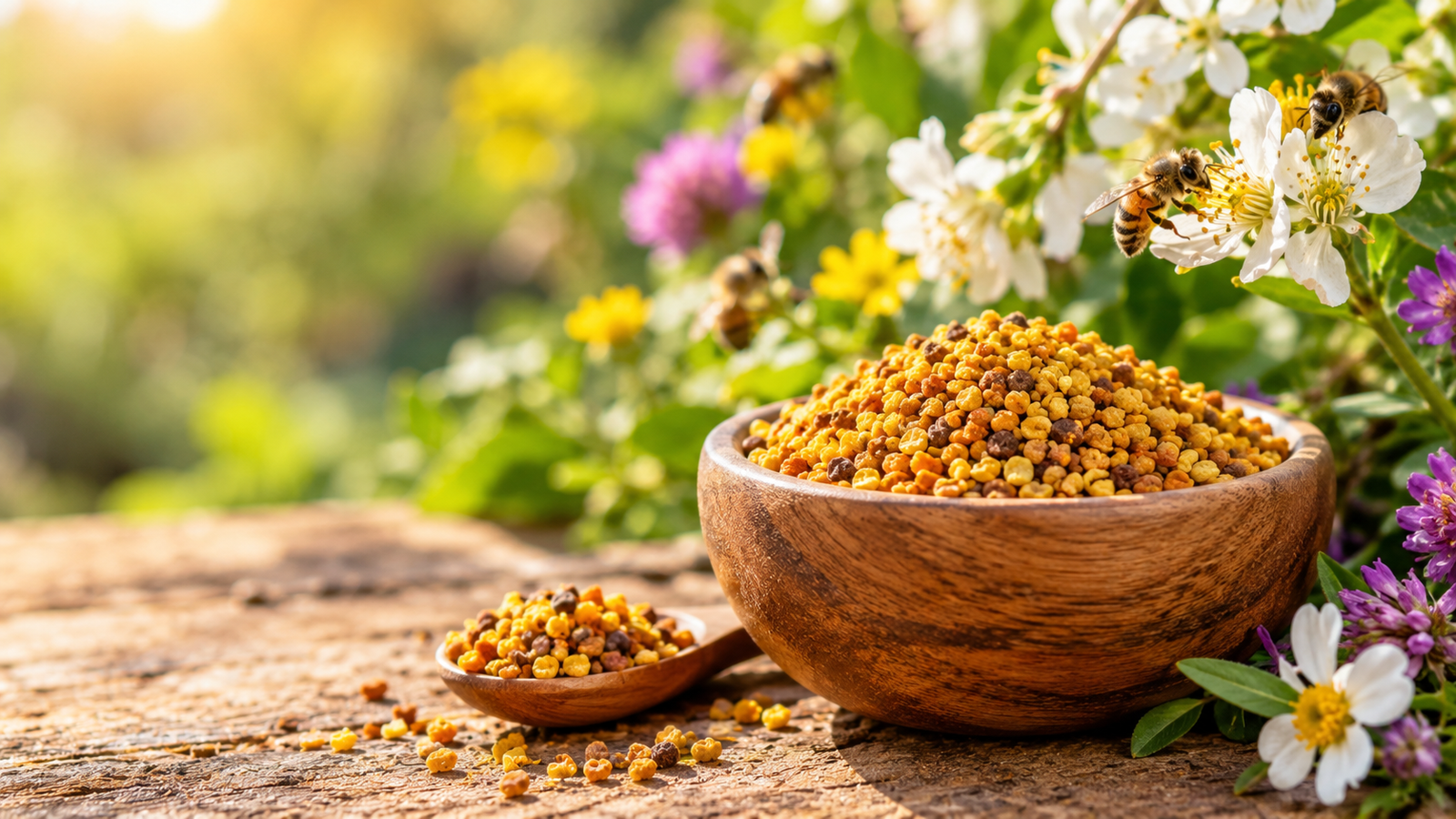
Bee pollen is a natural mixture of flower pollen grains, small amounts of nectar, and bee secretions that worker honeybees collect and transport to their colonies.
When a worker honeybee visits a flower, pollen grains attach to its body. The bee uses its legs and mouthparts to gather the pollen and pack it into compact pellets held in specialized structures called corbiculae, commonly known as pollen baskets, on its hind legs.
The bee then carries these pollen loads back to the hive.
Inside a honeybee colony, pollen is an important source of protein, lipids, vitamins, and minerals. Worker bees use stored pollen to produce food for developing larvae and support the nutritional needs of the colony.
Beekeepers can collect some of this pollen using specially designed pollen traps placed at hive entrances.
Commercial bee pollen is commonly sold in three forms:
- Granules: Small dried or fresh pollen pellets collected from honeybees.
- Powder: Bee pollen that has been ground into a finer consistency.
- Capsules: Supplement products containing measured quantities of bee pollen or pollen preparations.
What nutrients does bee pollen contain?
Bee pollen can contain:
| Nutrient or compound | General nutritional role |
|---|---|
| Protein | Supplies amino acids used in body tissues and other biological processes |
| Carbohydrates | Provide dietary energy |
| Lipids | Supply fatty acids and contribute to normal cellular functions |
| Amino acids | Help the body build proteins |
| Vitamins | Support different metabolic and physiological processes |
| Minerals | Participate in bone, muscle, nerve, and other bodily functions |
| Polyphenols and flavonoids | Plant compounds investigated for antioxidant activity |
| Dietary fibre | May contribute to overall dietary fibre intake |
The exact amounts vary considerably. Research reviews have found substantial differences in the protein, carbohydrate, fat, fibre, mineral, and phenolic content of bee pollen samples from different botanical and geographical sources.
This means that two bee pollen products can have different nutritional profiles even when they look similar.
A product’s nutritional value should therefore be assessed using its actual composition and serving size rather than assuming that every bee pollen supplement contains the same nutrients.
Scientific reference: Composition and Functionality of Bee Pollen – Trends in Food Science & Technology.
What Does Bee Pollen Do for Women?
Bee pollen provides nutrients and plant compounds that can contribute to a varied diet. However, its nutritional properties should not be confused with proven medical benefits.
Women may be interested in bee pollen for several reasons:
- It provides varying amounts of protein, amino acids, minerals, and other nutrients.
- Its carbohydrate content contributes dietary energy.
- It contains plant compounds investigated for antioxidant properties.
- It is being studied for possible biological effects relevant to human health.
- Specialized pollen extracts have been investigated for certain menopause-related symptoms.
However, ordinary bee pollen has not been established as a treatment for hormonal imbalance, infertility, PMS, skin conditions, weight problems, or menopause.
For most women, it is an optional food supplement rather than something necessary for maintaining good health.
1. Bee Pollen May Contribute to Women’s Nutritional Intake
One of the most straightforward potential benefits of bee pollen for women is its nutritional composition.
It contains varying amounts of protein, amino acids, carbohydrates, fats, vitamins, minerals, and plant compounds.
These nutrients participate in different functions throughout the body. For example, protein supplies amino acids needed for tissue maintenance, carbohydrates provide energy, and minerals participate in processes such as muscle contraction and normal nerve function.
However, the nutritional contribution of bee pollen depends on how much a woman consumes and the composition of the particular product.
A practical nutritional example
Consider a woman who adds a small quantity of bee pollen granules to her breakfast yogurt.
She is introducing another food ingredient containing protein, carbohydrates, fats, and plant compounds into her meal.
However, this does not mean the serving provides enough iron to correct iron deficiency or enough protein to replace a substantial protein-containing food.
Women should not rely on bee pollen as their primary source of essential nutrients.
A varied diet containing foods such as beans, lentils, eggs, fish, vegetables, fruits, whole grains, nuts, and seeds provides a more dependable nutritional foundation.
Important: Bee pollen is not a substitute for prescribed iron supplements, prenatal vitamins, or treatment for diagnosed nutritional deficiencies.
2. Can Bee Pollen Give Women More Energy?
Bee pollen is frequently advertised as a natural energy booster.
Its carbohydrate content can contribute calories, while its protein, fats, and other nutrients contribute to its overall nutritional value.
However, there is insufficient strong human evidence that ordinary bee pollen consistently improves energy levels, physical endurance, or athletic performance in women.
The presence of iron and B vitamins in some bee pollen products also does not mean they can reliably correct deficiencies.
Why some women experience persistent fatigue
Fatigue can have several causes, including:
- Insufficient sleep.
- Inadequate food intake.
- Iron-deficiency anemia.
- Thyroid disorders.
- Certain infections.
- Stress and other health conditions.
For example, a woman who experiences persistent tiredness because of iron-deficiency anemia will not necessarily improve by adding bee pollen to her breakfast.
She needs appropriate assessment and treatment of the underlying deficiency.
Bee pollen should not be presented as a proven treatment for unexplained fatigue.
3. Does Bee Pollen Balance Women’s Hormones?
Hormonal balance is one of the most frequently advertised benefits of bee pollen.
Women’s reproductive health involves several hormones, including estrogen, progesterone, luteinizing hormone, and follicle-stimulating hormone.
These hormones participate in menstrual cycles, ovulation, reproductive function, and other physiological processes.
Bee pollen contains naturally occurring plant compounds, including polyphenols and flavonoids. Some plant compounds can interact with biological pathways, which has encouraged research into their potential health effects.
However, finding plant compounds in bee pollen does not establish that consuming it changes a woman’s estrogen or progesterone levels.
There is currently insufficient reliable human evidence that ordinary bee pollen regulates female reproductive hormones.
It has not been established as a treatment for:
- Irregular menstrual cycles.
- Polycystic ovary syndrome (PCOS).
- Hormonal acne.
- Low estrogen.
- Progesterone deficiency.
- Premenstrual syndrome.
- Perimenopause-related hormonal changes.
Does bee pollen increase estrogen?
There is no convincing clinical evidence that ordinary bee pollen reliably increases estrogen levels in women.
Women should be particularly careful about supplement advertisements that promise to increase estrogen naturally or correct hormonal imbalance without explaining the scientific evidence.
Persistent menstrual irregularities, unexplained changes in periods, and other possible hormonal symptoms deserve appropriate medical assessment.
4. Does Bee Pollen Help With PMS and Period Cramps?
Premenstrual syndrome (PMS) describes physical and emotional symptoms that occur before menstruation.
These can include:
- Breast tenderness.
- Bloating.
- Mood changes.
- Headaches.
- Fatigue.
- Irritability.
- Abdominal discomfort.
Some supplement advertisements suggest that bee pollen can help reduce these symptoms.
However, there is insufficient reliable clinical evidence that ordinary bee pollen treats PMS, regulates menstrual cycles, or relieves menstrual cramps.
Its nutritional content does not automatically establish a direct effect on the hormonal and physiological processes responsible for menstrual symptoms.
Women experiencing troublesome PMS or period pain should consider evidence-based management options with a healthcare professional.
Severe menstrual pain, unusually heavy bleeding, or significant changes in menstrual patterns should not be dismissed as ordinary PMS.
5. Can Bee Pollen Improve Women’s Skin?
Bee pollen contains naturally occurring plant compounds, including phenolic compounds and flavonoids.
Some of these substances demonstrate antioxidant activity in laboratory research.
Antioxidants are investigated because they can interact with reactive molecules involved in oxidative processes within the body.
However, laboratory antioxidant activity does not prove that eating bee pollen produces visible improvements in human skin.
There is insufficient strong clinical evidence that oral bee pollen:
- Removes wrinkles.
- Clears acne.
- Fades dark spots.
- Improves skin elasticity.
- Makes skin glow.
- Prevents premature skin aging.
Does eating bee pollen improve skin more than applying it?
These are two different forms of exposure.
Eating bee pollen involves digestion and absorption of its constituents. Applying a formulated skincare product involves direct contact between its ingredients and the skin.
Research involving a pollen-derived cosmetic ingredient cannot automatically establish that eating ordinary bee pollen produces the same results.
Women interested in maintaining healthy skin should prioritize sun protection, appropriate skincare, sufficient sleep, and balanced nutrition.
Bee pollen should not be advertised as a clinically proven beauty treatment.
6. Does Bee Pollen Increase Fertility in Women?
Bee pollen is sometimes promoted as a natural fertility supplement.
Some traditional uses and preliminary animal studies have investigated reproductive effects associated with bee products.
However, these findings do not establish that ordinary bee pollen improves fertility in women.
Currently, there is insufficient reliable human evidence that bee pollen:
- Increases the chances of pregnancy.
- Improves egg quality.
- Stimulates ovulation.
- Increases ovarian reserve.
- Treats infertility.
- Improves IVF success rates.
Female fertility depends on several factors, including age, ovulation, reproductive anatomy, hormone function, and other medical considerations. Male reproductive health also contributes to the chances of conception.
A practical example
A woman experiencing difficulty becoming pregnant might consider bee pollen because it is marketed as a natural fertility booster.
However, difficulty conceiving can have several underlying causes, including ovulation disorders, blocked fallopian tubes, endometriosis, and male-factor infertility.
Adding bee pollen to her diet does not diagnose or treat these conditions.
A fertility assessment is more appropriate than relying on an unproven supplement.
Women trying to conceive should also discuss bee pollen use with a healthcare professional because its safety during pregnancy has not been adequately established.
7. Can Bee Pollen Help Women During Menopause?
Menopause is a natural stage of life associated with changes in reproductive hormone production.
It usually occurs between the ages of 45 and 55, although the timing varies between women.
Common symptoms include:
- Hot flashes.
- Night sweats.
- Sleep disturbances.
- Mood changes.
- Vaginal dryness.
- Changes in sexual comfort.
- Joint and muscle discomfort.
Some women explore pollen-based supplements because they are looking for alternatives to conventional menopause treatments.
However, an important scientific distinction must be made between ordinary bee pollen and specialized purified flower-pollen extracts.
Ordinary bee pollen versus purified pollen extract
Ordinary bee pollen consists of flower pollen grains collected and packed by honeybees.
Specialized purified pollen extracts are processed preparations that have been investigated in certain clinical studies involving menopausal women.
These products are not interchangeable.
Evidence involving a particular purified pollen extract cannot automatically demonstrate that ordinary bee pollen granules or capsules relieve menopause symptoms.
What does scientific research show?
A 2024 systematic review and meta-analysis published in the journal Menopause examined purified pollen extracts for menopause-related symptoms.
The researchers included five studies involving 420 participants.
The combined results showed improvements in several symptoms when measurements before treatment were compared with measurements after treatment.
However, when the researchers analyzed controlled studies together, the improvements were no longer statistically significant.
This is an important limitation because improvements in uncontrolled studies can sometimes reflect placebo effects, natural symptom changes, or other factors rather than the supplement itself.
Consequently, the researchers concluded that the available controlled evidence did not establish a significant treatment effect.
What this means for women: Some specialized pollen extracts have been investigated for menopause symptoms, but the research does not establish that ordinary bee pollen treats hot flashes, night sweats, or other menopause symptoms.
Women experiencing disruptive menopause symptoms should discuss suitable treatment options with a healthcare professional.
Scientific reference: The Efficacy of Purified Pollen Extract for Reducing Vasomotor Symptoms in Women: A Systematic Review and Meta-analysis (2024).
8. Does Bee Pollen Help Women Lose Weight?
Bee pollen is sometimes marketed as a natural weight-loss supplement or fat burner.
Some advertisements suggest that it can speed up metabolism, reduce appetite, or help women lose belly fat.
However, there is no convincing clinical evidence that ordinary bee pollen directly burns body fat, meaningfully increases metabolic rate, or produces reliable weight loss in women.
Bee pollen contains calories, and consuming it does not guarantee that a person will lose weight.
What actually matters for weight management?
Sustainable weight management involves several factors:
- Appropriate food portions.
- Balanced meals.
- Regular physical activity.
- Sufficient sleep.
- Consistent eating habits.
- Individual health considerations.
For example, adding bee pollen to an already calorie-sufficient diet does not automatically create the energy deficit needed for weight loss.
Women should be cautious about products promising rapid fat loss without credible clinical evidence.
9. Can Bee Pollen Support Women’s Immune Health?
Bee pollen contains nutrients and plant compounds that researchers have investigated for their biological properties.
Laboratory and animal studies have examined antioxidant, anti-inflammatory, and other potential effects.
However, these findings should not be confused with proof that bee pollen supplements prevent infections or significantly strengthen the human immune system.
There is insufficient reliable human evidence to establish such benefits in women.
Bee pollen should not replace:
- Vaccination.
- Balanced nutrition.
- Adequate sleep.
- Appropriate medical treatment.
- Other recommended preventive healthcare measures.
It should also not be used as an allergy remedy. In susceptible individuals, consuming bee pollen can trigger allergic reactions.
10. Does Bee Pollen Improve Digestion?
Bee pollen contains carbohydrates, proteins, fats, and varying amounts of dietary fibre.
Its nutritional composition has encouraged research into possible digestive and biological effects.
Some preliminary research has investigated how pollen compounds interact with intestinal processes and microorganisms.
However, there is insufficient strong human clinical evidence that eating ordinary bee pollen:
- Relieves constipation.
- Treats bloating.
- Improves the human gut microbiome.
- Treats digestive disorders.
- Reliably improves bowel movements.
A woman experiencing persistent digestive discomfort should not assume bee pollen will resolve the underlying problem.
Adequate fluids, suitable fibre intake, a varied diet, and appropriate medical assessment when needed are more dependable approaches.
11. Does Bee Pollen Increase Breast Size?
There is no credible clinical evidence that eating bee pollen increases breast size.
Breast size is influenced by several factors, including genetics, hormones, body composition, age, and life stages such as pregnancy.
Although bee pollen contains plant compounds, this does not demonstrate that consuming it stimulates breast tissue growth.
Women should be cautious about supplement advertisements promising breast enlargement through bee pollen.
There is no established bee pollen dosage or scientifically proven consumption schedule for increasing breast size.
12. Does Bee Pollen Help Women With Anemia?
Bee pollen can contain iron and other minerals, but the amount varies considerably between products.
This means that its nutritional contribution cannot be assumed to be sufficient for treating iron-deficiency anemia.
Iron-deficiency anemia occurs when the body does not have enough iron to produce adequate healthy hemoglobin.
Women may develop iron deficiency for several reasons, including heavy menstrual bleeding, inadequate dietary iron intake, pregnancy, or certain medical conditions.
Why bee pollen is not an anemia treatment
Consider a woman who experiences tiredness, dizziness, and weakness because of iron-deficiency anemia.
Adding bee pollen to her breakfast does not guarantee that she will receive enough absorbable iron to correct the deficiency.
She may need blood tests, identification of the underlying cause, and an appropriate iron treatment plan.
Bee pollen should therefore be considered an optional food ingredient, not a replacement for medical treatment.
13. Does Bee Pollen Help Women After Childbirth?
After childbirth, women may experience physical recovery, hormonal changes, sleep disruption, and nutritional demands associated with breastfeeding.
Although bee pollen contains nutrients, there is insufficient reliable human evidence that taking it:
- Speeds up postpartum recovery.
- Increases breast milk production.
- Treats postpartum fatigue.
- Prevents postpartum anemia.
- Restores reproductive hormones after childbirth.
Breastfeeding women should be particularly cautious because reliable safety information about bee pollen supplements is limited.
A woman recovering after childbirth should prioritize appropriate nutrition, hydration, rest, and medical follow-up.
Any postpartum nutritional deficiency or health complication should be assessed and treated appropriately rather than managed with an unproven supplement.
How Can Women Take Bee Pollen?
Bee pollen is available in different forms, and the way women consume it depends on the product.
1. Bee pollen granules
Granules are among the most recognizable forms of bee pollen.
They can be eaten alone or mixed into foods such as yogurt and oatmeal.
2. Bee pollen powder
Powdered bee pollen can be mixed into certain foods and beverages.
It may be easier to distribute throughout a meal than larger granules.
3. Bee pollen capsules
Capsules provide measured quantities according to the product label.
However, a measured serving does not mean the supplement has been clinically proven to deliver a particular health benefit.
Practical ways to include bee pollen in food
Women who have already received appropriate advice about using bee pollen may encounter it in foods such as:
- Plain yogurt with fruit.
- Oatmeal.
- Smoothies.
- Breakfast bowls.
- Certain homemade food preparations.
Example: A breakfast bowl containing plain yogurt, blueberries, oats, and a small amount of bee pollen provides several different food ingredients. The nutritional contribution comes from the overall meal, not from a proven special effect of bee pollen.
No particular preparation method has been demonstrated to increase bee pollen’s medical benefits.
How Much Bee Pollen Should a Woman Take Daily?
There is no scientifically established daily dose of ordinary bee pollen for women’s hormonal health, fertility, menopause symptoms, skin health, or general wellness.
Different products contain different amounts and compositions.
A manufacturer’s suggested serving size is not the same as a medically established effective dose.
Women should avoid automatically following high-dose recommendations or supplement routines promoted online.
Importantly, taking a very small amount does not guarantee protection against an allergic reaction.
Women with pollen allergies, asthma, or a history of serious allergic reactions to bee products should avoid experimenting with bee pollen and seek appropriate medical advice.
Side Effects of Bee Pollen in Women
Bee pollen is a natural product, but natural origin does not guarantee safety.
Its possible side effects and risks include allergic reactions, digestive discomfort, medication interactions, and uncertainties surrounding pregnancy and breastfeeding.
1. Allergic reactions
Allergic reactions are among the most important safety concerns associated with bee pollen.
The pollen grains and other plant-derived substances in the product may trigger reactions in susceptible individuals.
Possible symptoms include:
- Itching.
- Hives.
- Skin rashes.
- Swelling of the lips or face.
- Wheezing.
- Difficulty breathing.
- Dizziness or faintness.
Severe reactions, including anaphylaxis, have been reported.
Women with known pollen allergies or a history of serious reactions to bee products should not assume bee pollen is safe.
If consumption causes difficulty breathing, throat or tongue swelling, faintness, or other signs of a severe allergic reaction, seek emergency medical assistance immediately. Use prescribed epinephrine promptly if available.
2. Digestive discomfort
Some people may experience digestive symptoms after consuming bee pollen.
Possible symptoms include:
- Nausea.
- Stomach discomfort.
- Bloating.
- Diarrhea.
If unwanted symptoms develop, stop taking the supplement and seek medical advice when appropriate.
3. Pregnancy and breastfeeding concerns
The safety of bee pollen supplements during pregnancy and breastfeeding has not been adequately established.
Pregnant women should avoid bee pollen supplements unless a qualified healthcare professional specifically advises otherwise.
Breastfeeding women should also avoid using bee pollen supplements because reliable information about their effects on breastfed infants is insufficient.
Women trying to conceive should discuss supplement use with their healthcare professional rather than assuming that a natural product is automatically safe.
Bee pollen should never replace prenatal vitamins or prescribed nutritional supplements.
4. Medication interactions
Bee pollen may interact with certain medications.
One particularly important concern involves warfarin, a medicine used to prevent blood clots.
A published case report described a patient whose INR increased after starting bee pollen while taking warfarin.
INR is a blood test used to monitor how strongly warfarin affects blood clotting.
The evidence for this interaction is limited, as it is based primarily on a single case report, but the potential consequences are important.
Women taking warfarin should consult their prescribing clinician or pharmacist before starting or stopping bee pollen.
Anyone taking prescription medication should disclose supplement use to their healthcare professional.
Research reference: Probable Interaction Between Warfarin and Bee Pollen – American Journal of Health-System Pharmacy.
5. Product quality and contamination
Bee pollen products can vary in quality, composition, processing, and storage conditions.
Pollen collected from plants growing in contaminated environments may contain unwanted substances, including heavy metals and pesticide residues.
Poor storage can also create conditions that encourage microbial growth or deterioration.
When considering a bee pollen product, check:
- Whether the ingredients are clearly identified.
- Whether the manufacturer provides traceable product information.
- Whether appropriate quality testing is available.
- Whether storage instructions are provided.
- Whether the product has clear batch and expiry information.
Quality controls can reduce some product risks, but they cannot eliminate the possibility of an allergic reaction.
Who Should Avoid Bee Pollen?
Certain women should be particularly cautious or avoid bee pollen supplements.
| Group | Important consideration |
|---|---|
| Women with known pollen allergies | Bee pollen can trigger serious allergic reactions |
| Women with a history of severe bee-product reactions | Should avoid unsupervised exposure |
| Women with asthma and pollen hypersensitivity | May be at increased risk of allergic complications |
| Pregnant women | Safety has not been adequately established |
| Breastfeeding women | Insufficient reliable safety information |
| Women taking warfarin | Possible interaction and increased bleeding risk |
| Women with unexplained health symptoms | Should seek assessment rather than relying on supplements |
Women should consult an appropriate healthcare professional before introducing bee pollen when they have relevant allergies, medical conditions, or medication-related concerns.
Bee Pollen vs. Bee Bread vs. Royal Jelly vs. Pollen Extract
These products are related to bees and flowering plants, but they are not the same substance.
Understanding their differences helps women avoid confusing research about one bee product with evidence about another.
| Product | What it is | Important distinction |
|---|---|---|
| Bee pollen | Flower pollen collected and packed by bees with nectar and bee secretions | Commonly sold as granules, powder, and capsules |
| Bee bread | Pollen stored in honeycomb cells and transformed through microbial activity and fermentation | Has undergone changes during storage inside the hive |
| Honey | A sugary food produced by bees from nectar | Primarily a carbohydrate-rich food |
| Royal jelly | A nutrient-rich secretion produced by worker honeybees | A different bee product with a different composition |
| Propolis | A resinous material collected from plant sources and modified by bees | Used by bees in hive construction and protection |
| Purified pollen extract | A specially processed pollen preparation | Some formulations have been investigated for menopause symptoms |
Why this distinction matters
Research involving royal jelly, propolis, bee bread, or specialized pollen extracts should not automatically be used as evidence that ordinary bee pollen provides the same effects.
For example, a clinical study involving a purified pollen extract does not establish that ordinary bee pollen granules relieve hot flashes.
This distinction is particularly important when evaluating products advertised for fertility, hormonal balance, menopause, and women’s general wellness.
Bee Pollen Benefits for Women: What Does the Evidence Say?
The following table summarizes the difference between bee pollen’s nutritional properties and its advertised health benefits.
| Claimed benefit | What scientific evidence currently shows |
|---|---|
| Nutritional support | Contains varying amounts of nutrients and plant compounds |
| Energy improvement | Supplies calories, but is not a proven fatigue treatment |
| Hormone balance | Not established in human studies |
| Estrogen increase | No convincing evidence for ordinary bee pollen |
| PMS relief | Insufficient reliable clinical evidence |
| Period-cramp relief | Not established |
| Fertility improvement | Not established |
| Menopause relief | Specialized pollen extracts have been studied, but controlled evidence remains inconclusive |
| Skin improvement | Not established for oral bee pollen |
| Breast enlargement | No credible supporting clinical evidence |
| Weight loss | Not established |
| Immune support | Clinical benefits remain uncertain |
| Digestive health | Insufficient strong human evidence |
| Anemia treatment | Not an established treatment |
| Postpartum recovery | Insufficient reliable human evidence |
The central distinction is that nutritional composition can be demonstrated through laboratory analysis, while medical benefits require appropriate human clinical evidence.
A substance can contain antioxidants, minerals, and amino acids without necessarily producing a measurable improvement in a particular health condition.
Frequently Asked Questions
1. What does bee pollen do for women daily?
Bee pollen provides varying amounts of protein, amino acids, carbohydrates, fats, minerals, and plant compounds. These can contribute to dietary variety. However, taking it daily has not been proven to balance hormones, increase fertility, improve skin, prevent disease, or relieve menopause symptoms.
2. Does bee pollen increase estrogen in women?
There is no convincing clinical evidence that ordinary bee pollen reliably increases estrogen levels in women. Its effects on female reproductive hormones have not been adequately established.
3. Can bee pollen help women with PCOS?
Bee pollen is not an established treatment for polycystic ovary syndrome. There is insufficient reliable human evidence that it improves ovulation, insulin resistance, androgen levels, or other PCOS-related outcomes.
4. Can bee pollen help with period cramps?
There is insufficient reliable clinical evidence that ordinary bee pollen relieves menstrual cramps. Women with severe or persistent period pain should seek medical evaluation.
5. Can bee pollen help women over 40?
Women over 40 may be interested in bee pollen for nutritional support or menopause-related symptoms. However, there is no established age-specific benefit, and ordinary bee pollen has not been proven to prevent or treat menopause symptoms.
6. Can bee pollen help women gain weight?
Bee pollen contains calories and nutrients, but it has not been proven to cause healthy weight gain or increase body fat in women.
7. Is bee pollen better than royal jelly for women?
Neither product can be considered universally better for women. Bee pollen and royal jelly are different substances with different nutritional compositions. Evidence for their proposed health benefits also varies.
8. How long does bee pollen take to work for women?
There is no scientifically established timeline for bee pollen benefits in women. Claims that it balances hormones, improves fertility, increases breast size, or clears skin within a specific number of days or weeks are not supported by strong clinical evidence.
9. Do women need bee pollen supplements?
No. Bee pollen is not an essential supplement for women. Most nutritional needs can be met through a balanced diet, while specific deficiencies or medical conditions may require individualized treatment.
10. Can women take bee pollen during pregnancy?
Pregnant women should avoid bee pollen supplements unless specifically advised otherwise by a qualified healthcare professional. Reliable safety information during pregnancy is insufficient, and bee pollen can cause serious allergic reactions.
11. Can breastfeeding women take bee pollen?
Breastfeeding women should avoid bee pollen supplements because there is insufficient reliable information about their safety for nursing mothers and infants.
12. Does bee pollen increase breast size?
No credible clinical evidence shows that ordinary bee pollen increases breast size. Claims that it stimulates breast tissue growth or produces a larger bust are not scientifically established.
13. Can bee pollen treat iron deficiency?
No. Although bee pollen can contain iron, its amount and nutritional availability vary. It is not an established treatment for iron-deficiency anemia.
14. Is bee pollen safe for women with allergies?
Women with known pollen allergies should avoid bee pollen because it can trigger serious allergic reactions, including anaphylaxis. A natural supplement is not automatically safe for people with allergies.
Conclusion: What Does Bee Pollen Do for Women?
Bee pollen provides a mixture of nutrients, including protein, amino acids, carbohydrates, fats, minerals, and plant compounds that can contribute to dietary variety.
Its most straightforward potential value for women is as an optional food supplement rather than a proven treatment for specific female health conditions.
Although researchers have investigated pollen compounds and specialized pollen extracts for possible biological and menopause-related effects, ordinary bee pollen has not been established as a treatment for hormonal imbalance, infertility, PMS, skin problems, breast enlargement, anemia, or weight loss.
Women should also understand its potential risks, particularly allergic reactions, pregnancy and breastfeeding uncertainties, product contamination, and possible medication interactions.
For most women, a balanced diet, healthy lifestyle habits, and appropriate medical care provide a more dependable foundation for long-term health than relying on bee pollen supplements.
Scientific Sources and Further Reading
The following references provide additional information about bee pollen’s nutritional composition, potential health effects, menopause research, and safety.
- MedlinePlus – Bee Pollen: Uses, safety, interactions, and dosage information.
- Acquarulo et al. (2024) – The Efficacy of Purified Pollen Extract for Reducing Vasomotor Symptoms in Women: Systematic review and meta-analysis, Menopause.
- Thakur and Nanda (2020) – Composition and Functionality of Bee Pollen: Trends in Food Science & Technology.
- Bee Pollen as Functional Food: Insights into Its Composition and Therapeutic Properties (2023): Antioxidants, National Library of Medicine.
- Chemical Properties and Biological Activity of Bee Pollen: Scientific review, National Library of Medicine.
- Hurren and Lewis (2010) – Probable Interaction Between Warfarin and Bee Pollen: American Journal of Health-System Pharmacy.
- Memorial Sloan Kettering Cancer Center – About Herbs: Information on pollen extracts and complementary therapies.
Medical information note: This article is for educational purposes and does not replace individualized medical advice, diagnosis, or treatment.
