

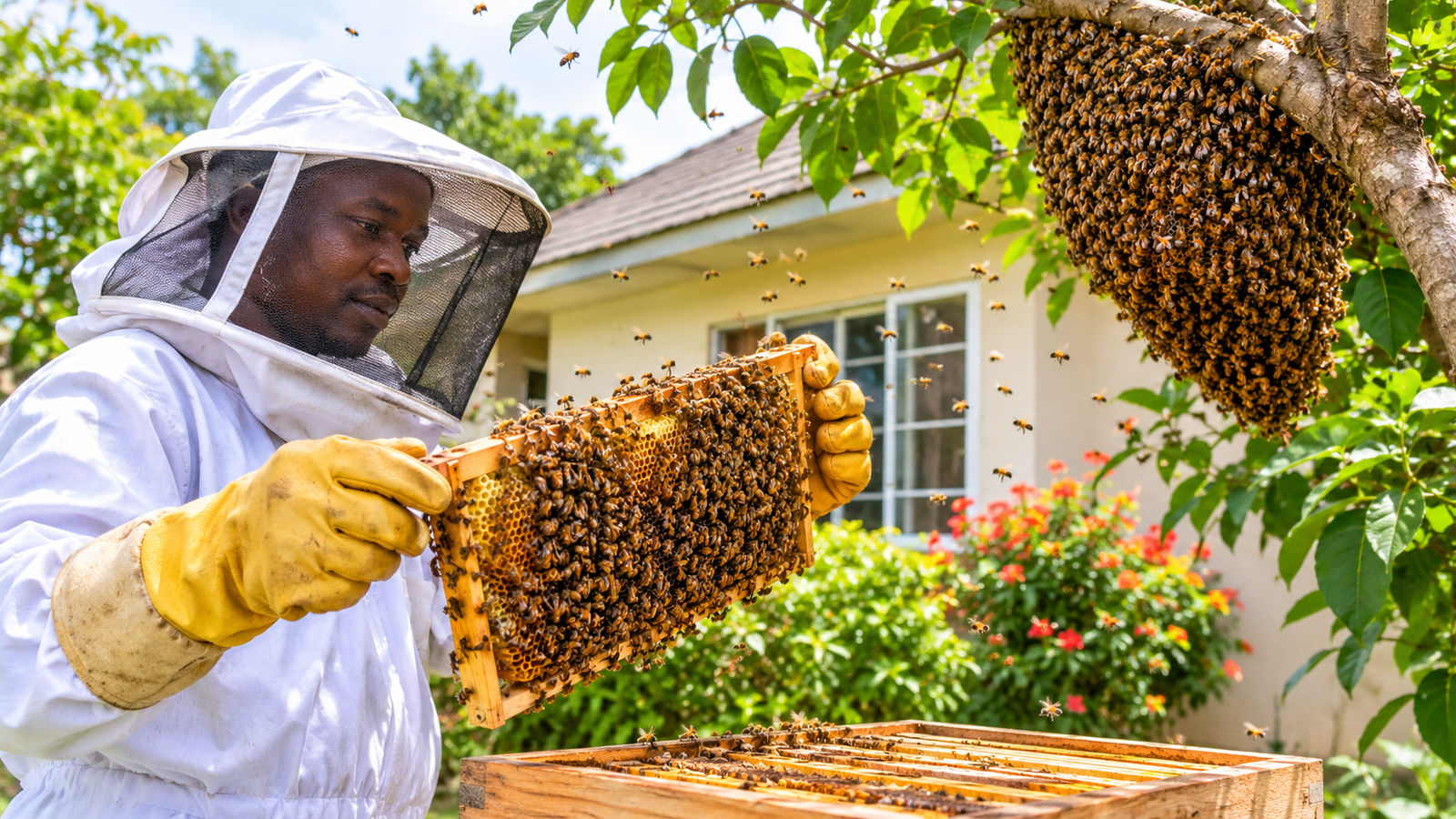
If you have bees gathering around your house, entering your roof, nesting inside walls, or flying around outdoor spaces, you may be wondering how to control them safely.
The best way to control bees depends on the type of bee, where it is located, and what it is doing. A honey bee swarm hanging from a tree requires a different approach from a honey bee colony nesting inside a wall or carpenter bees drilling holes into wooden structures.
To control unwanted bee activity, first identify the bee and determine whether it is simply visiting flowers, searching for a nesting site, or protecting an established colony. You can reduce unwanted visits by covering exposed food, managing attractive water sources, installing window screens, and closing unused building openings. If bees have established a colony inside your property, arrange professional removal rather than spraying or sealing the entrance yourself.
Bee control does not always mean killing bees. Honey bees, bumblebees, and solitary bees perform important pollination activities. The goal should be to prevent dangerous encounters, protect buildings, and manage unwanted nesting while preserving beneficial pollinators whenever possible.
This guide explains how to control bees around homes, gardens, farms, and buildings, including practical prevention methods, swarm management, professional removal, and ways to prevent bees from returning.
1. Identify the Type of Bee Before Choosing a Control Method
One of the biggest mistakes people make when controlling bees is assuming that all bees behave in the same way.
Different bee species have different nesting habits, colony structures, and defensive behaviours. A method suitable for a honey bee colony may be unnecessary or inappropriate for a solitary bee.
Honey bees (Apis mellifera)
Honey bees are social insects that live in colonies containing a queen, worker bees, and drones. A colony may contain thousands of individuals and produces wax comb in which it raises young bees and stores honey and pollen.
Honey bees may establish colonies in hollow trees, roof spaces, wall cavities, and other protected locations.
If honey bees are repeatedly entering a small opening in your building, an established colony may be inside.
Appropriate control: Have an experienced beekeeper or qualified specialist assess the colony and arrange safe removal when necessary.
Bumblebees (Bombus species)
Bumblebees are generally larger and rounder than honey bees, with dense hair covering much of their bodies. Many species have distinctive black, yellow, orange, or white markings.
Unlike honey bees, most bumblebee colonies are relatively small and usually last for one season. Depending on the species, they may nest underground, in abandoned rodent burrows, or in sheltered cavities.
Appropriate control: Leave a nest undisturbed when possible. If it creates a genuine safety problem, consult a local bee specialist about suitable management.
Carpenter bees (Xylocopa species)
Carpenter bees are relatively large bees that excavate tunnels in wood to create nesting galleries. Some species have a shiny, dark abdomen that helps distinguish them from the densely hairy bodies of many other bees.
They may bore into untreated timber, wooden fences, roof structures, and outdoor furniture.
Appropriate control: Identify the nesting holes, protect vulnerable timber, and obtain professional advice if the damage is significant. Do not assume that every large bee near wood is a carpenter bee.
Leafcutter bees (Megachile species)
Leafcutter bees are mostly solitary. Females collect pieces of leaves to line their nesting cells, which may be located in hollow stems, soil, or existing cavities.
Small semicircular cuts along the edges of leaves may indicate leafcutter bee activity.
Appropriate control: Usually, no intervention is necessary. These bees rarely create the same structural problems as a honey bee colony inside a building.
Bee identification and control comparison
| Bee type | Common nesting location | Main concern | Suitable management |
|---|---|---|---|
| Honey bee | Hollow trees, roofs, wall cavities | Large colony and defensive behaviour | Professional swarm collection or colony removal |
| Bumblebee | Underground burrows and sheltered cavities | Accidental encounters near nests | Usually leave undisturbed |
| Carpenter bee | Holes in wooden structures | Damage to timber | Protect wood and manage nesting holes |
| Leafcutter bee | Soil, stems, existing cavities | Minor leaf damage | Usually tolerate and protect |
Identifying the bee before acting prevents unnecessary destruction of beneficial insects and helps you choose an appropriate solution.
2. Understand Why Bees Are Coming to Your Property
Bees generally visit properties for food, water, or suitable nesting locations. Understanding which resource is attracting them makes control more effective.
Food and sugary substances
Honey bees collect nectar and pollen from flowers. They may also investigate exposed sugary substances, especially when natural food sources are less available.
Common attractants include:
- Overripe mangoes, bananas, oranges, and other fruits.
- Fruit juice and sugary drinks.
- Exposed honey and sweet food.
- Food waste around outdoor eating areas.
- Flowering plants and fruit trees.
For example, if bees repeatedly gather around fallen mangoes in your garden, exposed fruit juice may be attracting them. Collecting damaged and fallen fruit can reduce this activity.
However, removing fallen fruit will not eliminate a colony nesting in a nearby wall or tree.
Water sources
Honey bees collect water for colony activities, including regulating hive temperature.
They may visit:
- Birdbaths.
- Swimming pools.
- Leaking outdoor taps.
- Open buckets.
- Water tanks.
- Drainage areas.
- Puddles and other water collections.
Repair unnecessary leaks and empty unused containers. If you maintain a garden water feature, keep it clean and consider positioning a safe water source away from busy human activity.
Suitable nesting spaces
Some bees need sheltered spaces to reproduce and establish nests.
Honey bees may use cavities in roofs, walls, and hollow trees. Carpenter bees excavate tunnels in wood, while many solitary bees nest in soil or existing cavities.
This is why identifying the species matters: removing standing water may reduce one attraction, but it will not prevent a carpenter bee from nesting in suitable timber.
3. How to Control Bees Around Your House
If bees are frequently visiting your home, begin with simple preventive measures that reduce unnecessary contact between people and bees.
Keep food and drinks covered
Do not leave sugary drinks, fruit juice, honey, sweets, or leftover food exposed outdoors.
After eating outside:
- Collect used plates and cups.
- Clean tables and outdoor surfaces.
- Dispose of food scraps.
- Store sugary substances in sealed containers.
- Clean spilled drinks immediately.
These measures reduce the availability of food around outdoor sitting areas.
Remove fallen and damaged fruits
Overripe fruit can attract bees and other insects because its sugary contents become accessible.
Regularly collect fallen fruits, particularly around patios, doorways, and places where children play.
Use covered rubbish containers and remove fruit waste promptly.
Install window and door screens
If bees frequently enter your home through open windows or doors, properly fitted insect screens can prevent entry.
Screens are especially useful in kitchens and rooms where windows remain open for ventilation.
Make sure doors and windows close properly and that damaged screens are repaired.
Keep rubbish containers covered
Food waste and exposed sweet residues can attract insects.
Use covered rubbish bins, clean containers regularly, and avoid leaving sugary waste exposed around outdoor areas.
Remember that sanitation reduces food-related attraction but does not remove a nesting colony.
4. How to Stop Bees From Nesting in Your Roof and Walls
Preventing bees from establishing colonies inside buildings is one of the most important long-term control measures.
Honey bees are cavity-nesting insects. When a reproductive swarm leaves its original colony, scout bees search for a protected space where the new colony can settle.
Roof cavities, hollow walls, unused buildings, and abandoned structures may provide suitable nesting conditions.
Inspect potential entry points
Check your property for:
- Gaps beneath roof edges.
- Cracks in exterior walls.
- Uncovered ventilation openings.
- Holes around pipes.
- Damaged roofing materials.
- Open spaces around windows.
- Cavities in unused wooden structures.
Use suitable building materials, sealants, and insect-proof mesh to close unused openings.
Do not seal an active bee entrance
This is an important exception to ordinary pest prevention.
If bees are already entering and leaving an opening, sealing it may trap them inside the structure. The colony may attempt to find another exit, potentially bringing bees into occupied rooms.
An established colony may also leave honeycomb and stored honey behind if improperly removed.
The correct approach is to have the colony assessed and removed before the entrance is permanently sealed.
After removal, clean the affected cavity, remove remaining comb and honey, repair damaged materials, and close the opening to reduce the possibility of reinfestation.
5. How to Control a Bee Swarm
A bee swarm is a group of bees that leaves an existing colony with a queen as part of natural colony reproduction.
A swarm may temporarily cluster on:
- Tree branches.
- Roof edges.
- Shrubs.
- Fences.
- Building walls.
- Outdoor structures.
A typical honey bee swarm forms a dense cluster while scout bees search for a suitable permanent nesting location.
How to identify a swarm
Common signs include:
- Hundreds or thousands of bees clustered together.
- A temporary mass hanging from a branch or another object.
- Bees moving around the cluster.
- Increased activity as scout bees search for a nesting location.
A cluster is not necessarily an established nest, but visual identification from a distance is not always conclusive.
Safe ways to manage a swarm
- Keep children and pets away.
- Do not shake or strike the branch.
- Avoid spraying the bees.
- Keep people from walking directly beneath the cluster.
- Contact an experienced beekeeper who offers swarm collection.
- Follow professional advice about whether the swarm should be collected or left undisturbed.
Some swarms move away naturally within hours or a few days. Others may establish a permanent nest if they find a suitable cavity.
If a swarm is close to a doorway, school, workplace, or other busy location, seek professional assistance rather than waiting for it to move.
Important difference: A temporary swarm and an established colony are not the same. A swarm is a moving group searching for a home, while an established colony occupies a nest and maintains comb for brood and food storage.
6. How to Remove an Established Bee Colony From a Building
When bees repeatedly enter and leave one opening in a roof, wall, or ceiling, they may have established a colony inside.
Other possible signs include:
- Persistent buzzing inside a wall.
- Bees appearing indoors.
- Wax or honey visible through an opening.
- Increasing bee traffic around one section of a building.
- Bees clustering around the same entrance over an extended period.
Step 1: Observe from a safe distance
Identify where the bees are entering and leaving without approaching the entrance.
Do not open the wall or roof yourself.
Step 2: Restrict access
Keep people and animals away from the affected area.
If bees are entering occupied rooms, close off the affected space if this can be done safely.
Step 3: Contact an experienced specialist
An experienced beekeeper or qualified pest-control professional should assess the location, colony size, accessibility, and safety risks.
Ask whether live extraction is possible.
Step 4: Remove the colony and comb
Professional removal may involve accessing the cavity, removing the bees, and extracting the honeycomb.
Removing only visible bees may leave behind brood, wax, honey, and other materials that can cause further problems.
Step 5: Clean and repair the cavity
After removal, the affected space should be cleaned and repaired.
Removing residual honeycomb and honey is particularly important because abandoned comb can attract other pests and may create sanitation or building-maintenance problems.
Finally, close suitable openings to prevent another colony from using the same cavity.
7. How to Control Carpenter Bees in Wooden Structures
Carpenter bees require a different management approach from honey bees because they excavate wood rather than establishing large colonies in the same way as honey bees.
Female carpenter bees create tunnels in suitable wood to provide nesting chambers for their offspring.
Signs of carpenter bee activity
Look for:
- Round entrance holes in wooden surfaces.
- Fresh sawdust-like material beneath openings.
- Repeated bee activity around timber.
- Galleries inside exposed wooden structures.
A carpenter bee hole is often relatively round and cleanly cut, but other wood-boring insects can cause similar damage.
Practical prevention
- Paint or seal vulnerable exposed timber.
- Maintain wooden fences and outdoor furniture.
- Replace severely damaged wood when necessary.
- Inspect wooden roof structures and exposed beams.
- Seek professional identification before treating suspected nesting galleries.
Painting or sealing suitable timber may make it less attractive to carpenter bees, but existing galleries may require additional management.
Do not fill an active nesting hole without first assessing whether bees are still inside.
8. How to Keep Bees Away From Gardens Without Killing Them
Bees visiting flowers are usually searching for nectar or pollen. Their presence is normal and beneficial.
If you want to reduce unwanted encounters in your garden, focus on separating human activities from areas with heavy bee activity.
Manage outdoor sitting areas
If bees frequently visit flowering plants near a patio or dining area, position outdoor seating away from the busiest flowering areas.
Keep drinks covered and clean food spills promptly.
Manage fruit trees
Collect overripe and fallen fruits regularly, especially near pathways and places where people sit.
Do not remove healthy flowering plants simply because bees visit them.
Use suitable physical barriers
Screens and enclosed outdoor spaces can reduce unwanted contact between people and flying insects.
If you have a vegetable garden, greenhouse, or outdoor dining area, consider suitable screening that allows ventilation while restricting insect entry.
Preserve beneficial pollinators
Honey bees, bumblebees, and solitary bees contribute to pollination.
For this reason, controlling bees in a garden should usually mean managing human-bee interactions rather than eliminating pollinators.
9. Do Natural Bee Repellents Work?
Many people search for natural ways to keep bees away, particularly peppermint oil, vinegar, and other strong-smelling household substances.
However, there is limited reliable evidence that these products consistently repel honey bees under ordinary outdoor conditions.
Peppermint oil
Peppermint oil is frequently promoted as a natural bee deterrent.
Although strong odours may affect insect behaviour under certain conditions, peppermint oil should not be considered a dependable way to prevent a honey bee colony from nesting in a roof or wall.
Concentrated essential oils may also irritate skin and harm insects on direct contact.
Vinegar
Vinegar is commonly suggested in homemade pest-control mixtures.
However, it is not a reliable solution for an established bee colony and should not be sprayed onto bees or their nests.
Commercial repellents
If considering a commercial insect repellent or deterrent, check that its label specifically permits the intended use.
Avoid products that may contaminate flowering plants or expose pollinators, pets, and people to harmful chemicals.
What works better?
For long-term prevention, prioritize:
- Properly fitted window and door screens.
- Repairing unused building openings.
- Maintaining roofs and walls.
- Covering food and waste.
- Professional removal of established colonies.
These approaches address the actual conditions that allow unwanted bee activity.
10. How to Control Aggressive Bees and Protect Yourself
Bees usually forage peacefully, but a colony may become defensive when it perceives a threat.
Defensive behaviour is particularly important around established honey bee colonies.
Some African honey bee populations can show strong defensive responses. However, defensive behaviour varies between colonies, and appearance alone cannot reliably predict how a particular colony will behave.
Warning signs
Watch for:
- Bees repeatedly approaching or following people.
- Increased buzzing around a nest.
- Bees emerging in large numbers after disturbance.
- Multiple bees attacking people or animals.
What to do during a bee attack
- Run away immediately and move away from the colony.
- Protect your face, eyes, and head while escaping.
- Seek shelter inside a house, vehicle, or other enclosed building.
- Do not stop to swat individual bees.
- Avoid jumping into water or hiding in bushes.
- Contact emergency services if someone is seriously injured.
If a person experiences difficulty breathing, swelling of the tongue or throat, dizziness, or other signs of a severe allergic reaction, seek emergency medical help immediately and use prescribed adrenaline if available.
Multiple stings also require prompt medical assessment, especially in children and other vulnerable people.
Never attempt to remove an aggressive colony yourself.
11. Should You Use Insecticides to Control Bees?
Insecticides can kill bees, but using them without identifying the problem can make a situation more dangerous.
For example, spraying an established colony inside a roof may kill exposed bees without removing the honeycomb or stored honey.
Disturbing a defensive colony can also result in multiple stings.
Comparison of common control methods
| Method | What it does | Recommendation |
|---|---|---|
| Window and door screens | Prevent bees from entering rooms | Good preventive measure |
| Covering food and rubbish | Reduces accessible food | Good preventive measure |
| Sealing unused openings | Reduces potential nesting spaces | Good after checking for active colonies |
| Professional swarm collection | Removes a temporary swarm | Preferred where collection is appropriate |
| Professional colony extraction | Removes an established colony and its comb | Preferred when feasible |
| Insecticide treatment | Kills exposed or treated insects | Only when professionally justified |
| Burning a nest | Creates fire and injury hazards | Never use |
| Petrol or kerosene | Creates fire, poisoning, and contamination risks | Never use |
| Blocking an active entrance | May trap bees inside a structure | Never do this before removal |
If live removal is not feasible and a colony presents a genuine safety threat, a qualified professional should determine the appropriate treatment.
12. How to Prevent Bees From Returning
Removing a colony is only part of long-term bee management.
If the original nesting cavity remains accessible and suitable, another swarm may discover it.
Use the following preventive checklist:
Building maintenance
- Inspect roofs and exterior walls.
- Repair cracks and unused openings.
- Fit suitable insect-proof mesh to appropriate ventilation spaces.
- Maintain wooden structures.
- Repair damaged window and door screens.
Outdoor maintenance
- Cover rubbish containers.
- Clean exposed food and sugary spills.
- Collect fallen fruit.
- Repair unnecessary water leaks.
- Keep unused containers free of standing water.
Regular inspections
Pay attention to repeated bee traffic around the same location.
A few bees visiting flowers do not necessarily indicate a nest. However, repeated entry and exit through one opening may indicate an established colony.
Arrange professional inspection when necessary.
13. How to Control Bees in a Beekeeping Apiary
Not every bee-control situation involves removing bees from a building. Beekeepers also need to manage colonies to prevent overcrowding, reduce swarming problems, and maintain healthy hives.
Prevent overcrowding
A growing honey bee colony needs sufficient space for brood rearing and food storage.
When available space becomes inadequate, overcrowding may contribute to swarming.
Beekeepers can monitor colony development and provide appropriate additional space when needed.
Monitor queen and colony health
Regular inspections help identify:
- Unusual brood patterns.
- Queen problems.
- Pest infestations.
- Signs of disease.
- Food shortages.
- Excessive colony congestion.
Inspection frequency should depend on the season, local conditions, colony strength, and management system.
Position hives carefully
Place hives away from busy walkways, doorways, and areas where people frequently gather.
Suitable barriers, such as hedges or screens, can encourage bees to fly above people rather than directly through busy spaces.
Provide suitable water sources
Bees need water for colony activities. Providing an appropriate water source can help reduce visits to swimming pools, outdoor taps, and other inconvenient locations.
Use appropriate protective equipment
Beekeepers should use suitable protective clothing, gloves where appropriate, and safe hive-handling practices.
In Ghana, local environmental conditions and colony behaviour should be considered when selecting inspection schedules and managing apiaries.
14. Common Mistakes to Avoid When Controlling Bees
| Mistake | Why it is a problem | Better approach |
|---|---|---|
| Spraying an unidentified group of bees | May disturb a colony and provoke defensive behaviour | Identify the situation first |
| Knocking down a swarm | Can cause unnecessary disturbance | Contact a beekeeper |
| Sealing an active entrance | May trap bees inside the building | Arrange colony removal first |
| Burning a nest | Creates fire and injury risks | Use professional removal |
| Pouring fuel into a nest | Creates serious fire and poisoning hazards | Never use fuel |
| Removing every flowering plant | Reduces food available to pollinators | Manage human-bee interactions |
| Ignoring bees entering a roof | Allows an unwanted colony to become established | Arrange an inspection |
| Assuming every large bee is a honey bee | Different species require different management | Identify the species first |
| Relying entirely on peppermint or vinegar | These are not dependable colony-control methods | Use physical prevention and professional help |
15. Bee Control Decision Guide: What Should You Do?
The correct method depends on what you are observing.
| What you see | Likely explanation | Recommended action |
|---|---|---|
| A few bees visiting flowers | Normal foraging | Leave them undisturbed |
| Bees around fallen mangoes | Accessible sugary food | Collect fallen and damaged fruit |
| A dense cluster hanging from a branch | Possible honey bee swarm | Keep away and contact a beekeeper |
| Bees repeatedly entering a roof opening | Possible established colony | Arrange professional inspection |
| Large bees visiting wooden holes | Possible carpenter bees | Identify and inspect timber damage |
| Small bees nesting in soil | Possible solitary ground-nesting bees | Avoid disturbing the nest |
| Bees attacking people | Defensive colony or severe disturbance | Escape to enclosed shelter and seek help |
This guide is useful because it prevents readers from applying the wrong treatment to different bee problems.
Frequently Asked Questions About How to Control Bees
1. What is the best way to control bees around your home?
The best method depends on whether bees are visiting, swarming, or nesting.
Cover exposed food, manage unnecessary water sources, install window screens, and prevent access to unused building cavities. If bees have established a colony inside your roof or walls, arrange professional removal.
2. What smell keeps bees away?
Peppermint and other strong-smelling substances are commonly suggested as bee deterrents, but there is limited evidence that they reliably repel honey bees in outdoor environments.
Physical barriers and property maintenance are more dependable prevention methods.
3. How do I stop bees from coming into my house?
Install properly fitted insect screens, repair damaged doors and windows, and close unused building openings.
If bees are repeatedly entering through one opening, investigate whether an established colony is inside before sealing it.
4. Does vinegar kill bees?
Vinegar is not a dependable method for controlling bee colonies. Direct exposure may harm individual insects, but it does not safely remove a colony or its honeycomb.
5. How do I get rid of a bee swarm?
Keep people and animals away and contact an experienced beekeeper who offers swarm collection.
Do not spray, knock down, or disturb the cluster. A swarm may move naturally, but it can also establish a permanent nest.
6. Can bees return after being removed?
Yes. Another swarm may occupy the same location if suitable nesting spaces remain available.
After removal, make sure the affected cavity is cleaned, remaining comb is removed, and appropriate openings are sealed.
7. Should I kill bees around my garden?
Generally, no. Bees visiting flowers are important pollinators and are usually not a threat.
Manage food waste and human activity around busy areas instead of destroying beneficial pollinators.
8. How can I control African honey bees?
Keep your distance, avoid disturbing unfamiliar colonies, and contact an experienced beekeeper or qualified specialist.
If attacked, run to enclosed shelter and protect your face and head. Never attempt to remove a defensive colony yourself.
9. What is the difference between controlling bees and removing a bee colony?
Controlling bees involves managing unwanted activity through prevention, barriers, and safe management practices.
Removing a bee colony involves extracting an established nest and its associated materials from a location.
A few bees visiting flowers may need no intervention, while a colony inside a roof may require specialist removal.
10. Can I control bees without harming them?
Yes. Installing screens, covering food, maintaining buildings, and arranging professional swarm collection are examples of ways to manage unwanted bee activity without automatically killing the insects.
Conclusion
Learning how to control bees starts with identifying the type of bee and understanding why it is visiting or nesting around your property.
For bees visiting flowers, the best solution is usually to manage human activity rather than remove the insects. For swarms, professional collection is generally the safest approach. For established colonies inside roofs, walls, and other structures, professional removal should include attention to the remaining honeycomb and nesting materials.
You can prevent many future problems by maintaining buildings, closing unused nesting spaces, covering food waste, and installing suitable physical barriers.
The most effective bee-control strategy protects people and property while preserving beneficial pollinators whenever possible.
References
1. University of California Statewide Integrated Pest Management Program: Removing Honey Bee Swarms and Established Hives – Swarm biology, colony establishment, building removal, and prevention. UC IPM
2. University of Florida IFAS Extension: Living with the African Honey Bee – African honey bee behaviour, property protection, swarm encounters, and safety. About+1
3. Utah State University Extension: Bumble Bees – Bumblebee identification, nesting behaviour, and management. USU
4. Utah State University Extension: Leafcutter Bees – Leafcutter bee identification, nesting, and plant damage. USU
5. Penn State Extension: Conserving Wild Bees in Pennsylvania – Wild bee diversity, solitary bee nesting, and pollinator conservation. Penn State Extension
6. University of Florida IFAS Extension: Swarm Control for Managed Beehives – Beekeeping practices for managing swarming in established apiaries.
