

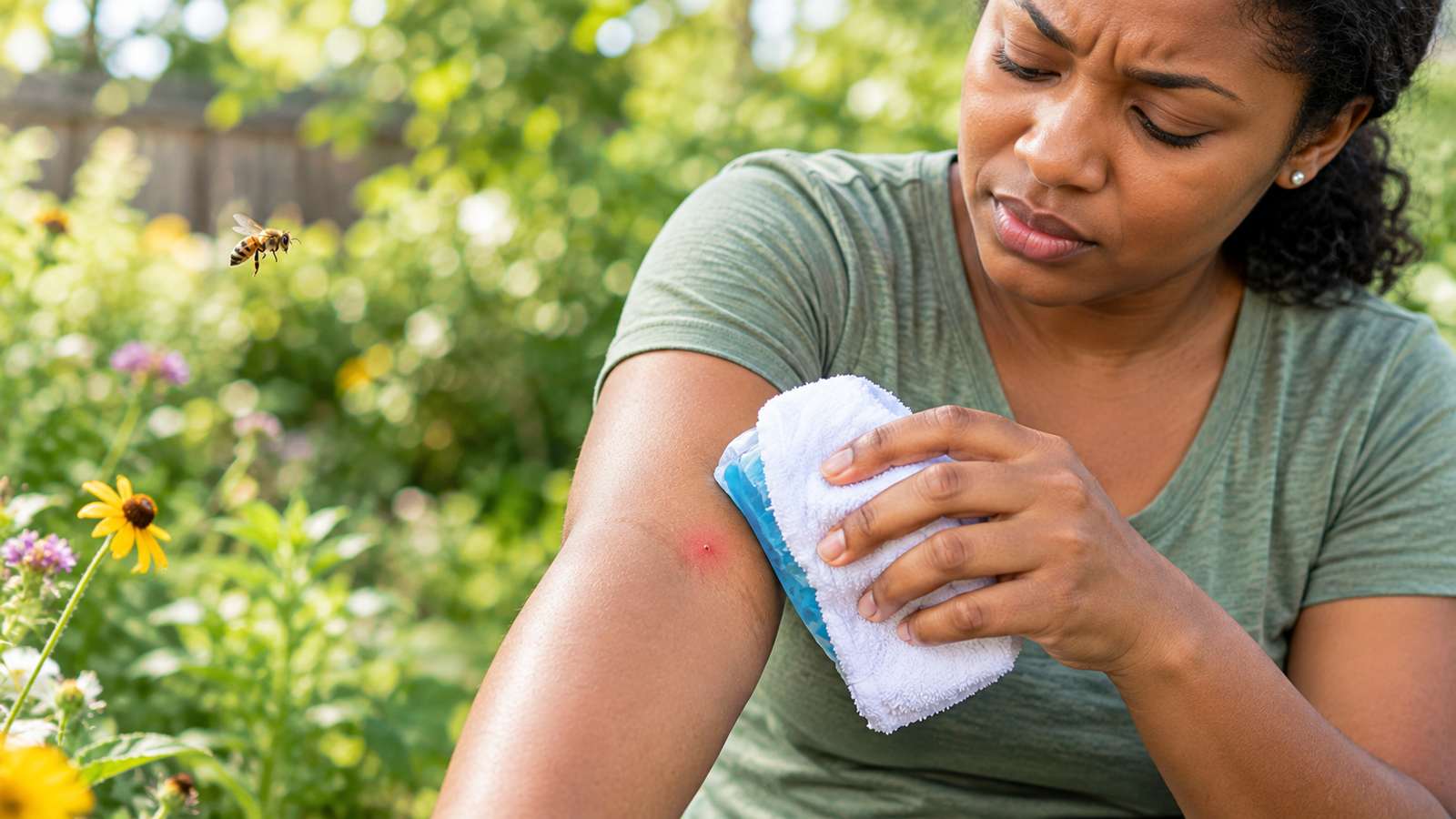
When bee bite what to do? If a bee bites or stings you, move away from the bee, check your skin for an embedded stinger, remove it promptly if present, and wash the affected area with soap and clean water. Apply a cold compress to reduce pain and swelling. Most bee stings cause temporary discomfort, but some can trigger serious allergic reactions that require emergency medical treatment.
Although people commonly use the expression “bee bite,” bees generally sting people when defending themselves. A honey bee may leave its barbed stinger behind, while many other bee species can withdraw their stingers without leaving them in the skin.
Knowing what to do immediately after a bee sting can help reduce discomfort, prevent additional stings, and identify potentially dangerous reactions.
This guide explains the first-aid steps to follow, how to treat pain and swelling, what happens when a bee stings different parts of your body, how bee species differ, and when you should seek medical attention.
What to Do Immediately When a Bee Bites or Stings You
If a bee stings you, act promptly. The first few minutes are important because an embedded honey bee stinger can continue delivering venom after the bee has flown away.
Follow these steps.
1. Move Away From the Bee
The first thing to do is move away from the area where the bee stung you.
Walk calmly toward a safe location, preferably indoors or somewhere protected from additional bee activity.
If you accidentally disturb a hive or encounter several defensive bees, leave the area rather than trying to investigate or remove the insects.
Avoid swatting at bees because sudden movements can provoke additional defensive behavior.
If several bees are following you, protect your face and head while moving away from the area.
2. Check for an Embedded Stinger
After reaching safety, examine the sting site carefully.
A honey bee stinger may look like a tiny dark splinter or sharp object sticking out of the skin. You may also notice a small venom sac attached to the embedded stinging apparatus.
Not every bee sting leaves a stinger behind.
If you find one, remove it as quickly as possible. You can scrape it sideways using a clean fingernail or the edge of a bank card, or carefully pluck it out.
The important thing is not to delay removal while searching for a particular tool.
Why is this important?
A honey bee’s barbed stinger can remain embedded in human skin after the bee flies away. The attached venom-delivery apparatus may continue injecting venom for a short period.
The longer the stinger remains embedded, the greater the opportunity for additional venom delivery.
3. Wash the Affected Area With Soap and Water
Once the stinger has been removed, gently wash the affected area using soap and clean running water.
This helps remove dirt and contaminants from the skin and keeps the small puncture wound clean.
Avoid aggressively squeezing the sting site, cutting the skin, or trying to extract venom using household objects.
These actions can cause additional irritation and damage.
4. Apply a Cold Compress
Place a cold pack or ice wrapped in a clean towel over the affected area.
Apply it for approximately 10–20 minutes at a time, allowing the skin to warm between applications.
A cold compress helps reduce pain and may limit swelling.
Never place ice directly against your skin for prolonged periods because it can cause cold-related skin damage.
5. Elevate the Affected Body Part
If the bee stings your hand, arm, foot, or leg, raise the affected area when practical.
Elevation can help reduce swelling.
For example, if a bee stings your finger, remove rings immediately before swelling makes them difficult to remove.
If the sting is on your foot, loosen tight footwear and elevate your leg while resting.
6. Watch for Signs of an Allergic Reaction
Most uncomplicated bee stings cause symptoms around the sting site.
However, some people develop a serious allergic reaction called anaphylaxis.
Watch for:
- Difficulty breathing or wheezing.
- Swelling of the tongue or throat.
- Difficulty swallowing.
- Dizziness or fainting.
- Widespread hives.
- Sudden weakness or collapse.
- Repeated vomiting or abdominal cramps alongside other allergic symptoms.
If these symptoms develop, seek emergency medical assistance immediately.
If the person has a prescribed adrenaline (epinephrine) auto-injector, use it immediately according to their emergency action plan. Do not wait for an antihistamine to work.
Even if symptoms improve after using adrenaline, emergency medical assessment is still necessary.
What Happens When a Bee Stings You?
A bee sting is more than a simple puncture wound.
When a bee stings, its stinging apparatus injects venom into the skin. The venom contains biologically active substances that trigger pain and an inflammatory response.
Your body’s reaction to the venom causes several familiar symptoms.
Why Does a Bee Sting Hurt?
Bee venom contains compounds that affect tissues and nerve endings.
One important component is melittin, a peptide that contributes to inflammation, pain, and tissue irritation.
The immediate burning or sharp sensation comes from the interaction between venom components and the body’s tissues.
Pain is usually strongest shortly after the sting and gradually improves.
Why Does a Bee Sting Cause Swelling?
Swelling occurs because the body responds to venom by releasing inflammatory chemicals.
These chemicals increase blood flow and make nearby blood vessels more permeable, allowing fluid and immune components to move into surrounding tissues.
This produces:
- Redness.
- Warmth.
- Itching.
- Tenderness.
- Swelling around the sting site.
Some people experience swelling that extends beyond the immediate puncture area.
A large local reaction can become more noticeable during the first 24–48 hours without necessarily indicating anaphylaxis.
Why Does a Bee Sting Itch?
Itching occurs partly because the immune system releases histamine and other inflammatory substances in response to the sting.
The affected skin may become irritated even after the initial pain has subsided.
Avoid scratching because broken skin can become infected.
Normal Bee Sting Reaction vs. Allergic Reaction
One of the most important things to understand after a bee sting is the difference between an ordinary local reaction and a potentially dangerous allergic reaction.
| Feature | Normal local reaction | Possible severe allergic reaction |
|---|---|---|
| Pain | Pain around sting site | May occur with other symptoms |
| Redness | Mainly around the sting | May accompany widespread symptoms |
| Swelling | Usually localized | May involve lips, tongue, or throat |
| Itching | Mainly around sting | Widespread itching or hives |
| Breathing | Normal | Difficulty breathing or wheezing |
| Dizziness | Usually absent | May occur |
| Fainting | Not expected | Possible |
| Medical response | Usually home treatment | Emergency medical assistance |
A person experiencing anaphylaxis does not need to have every symptom listed above.
For example, someone may develop breathing difficulties and dizziness without first developing widespread hives.
Do not assume that a reaction is harmless simply because the person has been stung only once.
Important: A person can develop a serious allergic reaction even if they have never previously experienced one.
How to Treat a Bee Sting at Home
Most uncomplicated bee stings can be managed at home using simple first-aid measures.
The appropriate treatment depends on the symptoms.
| Symptom | What to do |
|---|---|
| Pain or burning | Apply a wrapped cold compress. |
| Mild swelling | Use a cold pack and elevate the affected limb. |
| Itching | Avoid scratching and ask a pharmacist about an appropriate antihistamine. |
| Redness | Keep the area clean and monitor changes. |
| Persistent discomfort | Consider an appropriate over-the-counter pain reliever. |
Treatment for Bee Sting Pain
Pain is usually strongest immediately after a sting.
A cold compress can provide temporary relief.
If necessary, an over-the-counter pain reliever such as paracetamol (acetaminophen) or ibuprofen may help.
Always follow the product instructions. Ask a pharmacist or healthcare professional before taking medication if you have an existing medical condition, use other medicines, or are unsure whether the medication is suitable.
Treatment for Bee Sting Itching
An oral antihistamine may help reduce itching caused by a local reaction.
Some antihistamines cause drowsiness, so check the label before driving or operating machinery.
A pharmacist may also recommend an appropriate topical corticosteroid for localized itching and inflammation.
Follow the product instructions and avoid applying treatments to broken skin unless directed.
Remember that antihistamines are not a treatment for anaphylaxis and must never replace emergency adrenaline treatment.
Treatment for Bee Sting Swelling
For ordinary local swelling:
- Apply a wrapped cold pack.
- Elevate the affected limb.
- Avoid scratching or rubbing the area.
- Remove tight jewellery or footwear.
- Monitor the swelling for changes.
Some large local reactions become more noticeable during the first 24–48 hours.
However, swelling of the tongue or throat, breathing difficulties, or other symptoms of anaphylaxis require emergency assistance.
What About Home Remedies for Bee Stings?
Many household remedies are recommended for bee stings, including toothpaste, vinegar, baking soda, alcohol, and essential oils.
However, these substances have not been established as reliable ways to neutralize bee venom or prevent allergic reactions.
Applying irritating substances may also worsen skin discomfort.
A cold compress, appropriate pain relief, suitable antihistamines, and proper wound care are more reliable options.
Do not use a home remedy as a substitute for medical treatment.
What to Do If a Bee Stings Different Parts of Your Body
The location of a bee sting can affect the type of care required.
A sting on your finger is generally different from one inside your mouth or near your eye.
What to Do If a Bee Stings Your Finger
Remove rings immediately before swelling increases.
Wash the affected finger with soap and water, remove any visible stinger promptly, and apply a wrapped cold compress.
Keep your hand elevated when possible.
Seek medical attention if swelling becomes severe, the finger changes colour, or movement becomes difficult.
What to Do If a Bee Stings Your Foot
Remove tight shoes and socks if they are pressing against the affected area.
Wash the sting site and apply a cold compress.
Elevate your foot while resting to help manage swelling.
If the swelling becomes extensive or you experience symptoms beyond the sting site, seek medical advice.
What to Do If a Bee Stings Your Face
A facial sting can cause noticeable swelling, especially around the eyelids and lips.
Wash the area gently and apply a wrapped cold compress.
Watch carefully for swelling involving the mouth, tongue, or throat.
If breathing or swallowing becomes difficult, seek emergency medical help immediately.
What to Do If a Bee Stings Your Eye
A sting to the eye itself requires prompt medical evaluation.
Do not rub the eye or attempt to remove an embedded object by yourself.
Seek professional medical assistance because an eye sting can cause significant injury and, in rare cases, threaten vision.
What to Do If a Bee Stings Your Mouth or Throat
A sting inside the mouth, tongue, or throat is particularly dangerous.
Swelling in these areas can narrow or obstruct the airway.
Seek emergency medical assistance immediately, even if the person is initially breathing normally.
Do not wait to see whether the swelling disappears.
What Happens If You Leave a Bee Stinger in Your Skin?
Leaving an embedded honey bee stinger in the skin can allow additional venom to enter the body.
A honey bee’s barbed stinger is connected to a venom-delivery apparatus that may continue working after the bee separates from it.
This is why prompt removal matters.
A retained stinger may also irritate the skin.
However, a small puncture mark or tenderness can remain even after the stinger has been successfully removed.
If you cannot remove a visible stinger safely, or the area becomes increasingly painful or inflamed, seek medical assistance.
Do not cut into the skin or dig deeply with a needle to retrieve it.
Can a Bee Sting You More Than Once?
This depends on the type of bee.
Honey bee workers generally cannot sting human skin repeatedly because their barbed stingers can become lodged in the skin, causing the bee to lose its stinging apparatus.
Other bees, including bumblebees and many solitary bee species, can withdraw their stingers and sting again.
This difference is important because not every bee sting results in the bee dying.
Do All Bees Leave Their Stingers Behind?
No. Different bee species have different stinging characteristics.
| Bee species | Can it sting? | Can it sting repeatedly? | Does it usually leave its stinger in human skin? |
|---|---|---|---|
| Honey bee worker | Yes | Generally no | Yes |
| Bumblebee | Yes | Yes | No |
| Carpenter bee | Females can sting | Yes | No |
| Many solitary bees | Yes | Generally yes | No |
Male bees do not have functional stingers, although some may bite in certain circumstances.
The most familiar example is the worker honey bee, whose barbed stinger often remains embedded in human skin.
What Happens If Multiple Bees Sting You?
Multiple bee stings can be more dangerous than a single sting because they expose the body to a greater quantity of venom.
This can cause toxic effects even in someone who does not have a bee allergy.
Possible symptoms include:
- Severe pain and swelling.
- Nausea and vomiting.
- Weakness.
- Headache.
- Muscle pain.
- Dark urine.
- Reduced urination.
In severe cases, extensive venom exposure can damage the kidneys and other organs.
There is no single number of stings that is guaranteed to be safe for everyone. The effects depend on the amount of venom, the person’s body size, age, health, and other circumstances.
Seek urgent medical advice after numerous stings, particularly when a child or a medically vulnerable person is involved.
Do not wait for severe symptoms to develop.
What If a Child Gets Stung by a Bee?
A bee sting can be frightening for a child, particularly if it happens while playing outside.
The first priority is to move the child away from the bee and assess their condition.
Follow these steps:
- Move the child to a safe location.
- Check the affected area for an embedded stinger.
- Remove any visible stinger promptly.
- Wash the area with soap and clean water.
- Apply a wrapped cold compress.
- Monitor the child for allergic symptoms.
- Contact a healthcare professional if the reaction is severe, unusual, or worsening.
Do not give a child adult medication doses.
Ask a pharmacist or healthcare professional about age-appropriate pain relief or antihistamines.
Seek emergency help if the child develops breathing difficulties, tongue or throat swelling, faintness, widespread hives with other concerning symptoms, or other signs of anaphylaxis.
Multiple stings in a child also require prompt medical advice.
What Not to Do After a Bee Sting
Some common reactions to a bee sting can make the situation worse.
Avoid these mistakes:
1. Do not delay removing a visible stinger.
Remove it promptly using an available method.
2. Do not scratch the sting site.
Scratching can damage the skin and introduce bacteria.
3. Do not cut or squeeze the affected area.
These actions do not safely remove venom and can cause additional injury.
4. Do not apply ice directly to your skin.
Always wrap cold packs in a towel or cloth.
5. Do not rely on toothpaste or baking soda to neutralize venom.
These remedies have not been established as effective treatments.
6. Do not use antihistamines as a substitute for emergency treatment.
Antihistamines may relieve local itching, but they do not treat airway obstruction or the dangerous effects of anaphylaxis.
7. Do not ignore symptoms that are getting worse.
Increasing pain, spreading redness, fever, significant swelling, or symptoms beyond the sting site may require medical assessment.
When Should You Seek Medical Help After a Bee Sting?
Not every bee sting requires a hospital visit.
However, some symptoms should never be ignored.
Seek Emergency Medical Help Immediately If:
- You experience difficulty breathing or wheezing.
- Your tongue or throat begins swelling.
- You have difficulty swallowing.
- You feel faint, collapse, or lose consciousness.
- You develop widespread hives with other symptoms suggesting anaphylaxis.
- You experience repeated vomiting or severe abdominal symptoms alongside other allergic symptoms.
- A sting inside your mouth or throat causes swelling.
If an adrenaline auto-injector has been prescribed, use it immediately according to the person’s emergency plan and activate emergency medical assistance.
Seek Prompt Medical Assessment If:
- A bee stings your eye.
- You receive numerous bee stings.
- Swelling becomes unusually extensive.
- Pain becomes severe or continues worsening.
- You cannot remove an embedded stinger safely.
- The sting area becomes increasingly hot, red, or tender.
- You develop fever or pus around the wound.
- You are unsure whether the reaction is normal.
Increasing redness, warmth, pain, and fever after the initial sting reaction may indicate an infection rather than an allergy.
How Long Does a Bee Sting Take to Heal?
The time required for a bee sting to heal depends on the person’s reaction and the amount of venom injected.
For many people, the immediate pain improves within several hours, while mild redness and swelling may last for a day or two.
A larger local reaction may become more noticeable during the first 24–48 hours and take several days to settle.
Some reactions can last up to a week.
The following table provides a general guide.
| Time after sting | What may happen |
|---|---|
| Immediately | Sharp pain, burning, and redness. |
| First few hours | Local swelling, itching, and tenderness. |
| 24–48 hours | Some local reactions become more noticeable. |
| 2–3 days | Mild reactions generally begin improving. |
| 4–7 days | Larger local reactions may gradually settle. |
This is a general guide, not a guaranteed recovery schedule.
If symptoms worsen instead of improving, or you develop signs of infection or an allergic reaction, seek medical assessment.
Frequently Asked Questions About What to Do When a Bee Bites
1. What should I do immediately after a bee bite?
Move away from the bee, check for an embedded stinger, remove it promptly, wash the affected area with soap and water, and apply a wrapped cold compress. Watch for signs of an allergic reaction.
2. Should I remove a bee stinger immediately?
Yes. Remove an embedded stinger as soon as possible. You can scrape it sideways or pluck it out. Prompt removal is more important than choosing one particular technique.
3. How do I know if a bee sting is dangerous?
Difficulty breathing, tongue or throat swelling, faintness, collapse, and widespread hives accompanied by other systemic symptoms can indicate a dangerous allergic reaction. Seek emergency assistance immediately.
4. Can a bee sting kill you?
Yes, although most bee stings are not life-threatening. A sting can cause fatal anaphylaxis in a person with a severe allergic reaction. Numerous stings can also cause dangerous venom toxicity.
5. Can a bee sting you without leaving its stinger?
Yes. Bumblebees, carpenter bees, and many other bee species can sting without leaving their stingers embedded in human skin.
6. Why does my bee sting keep swelling?
The body’s inflammatory response to bee venom can cause swelling that develops over several hours. Some people experience large local reactions that become more noticeable during the first 24–48 hours.
However, rapidly worsening swelling, facial or throat swelling, and other systemic symptoms require medical assessment or emergency care.
7. What happens if I do not remove a bee stinger?
An embedded honey bee stinger can continue delivering venom for a short time. Prompt removal helps limit additional venom exposure.
8. Should I put toothpaste on a bee sting?
No. Toothpaste has not been established as a reliable treatment for bee stings. Use a cold compress and appropriate medical treatments instead.
9. Can a bee sting cause an allergic reaction hours later?
Most serious sting-related allergic reactions develop rapidly, but symptoms can vary. Continue monitoring for concerning symptoms after a sting and seek emergency assistance if signs of anaphylaxis appear.
10. Should I go to the hospital after multiple bee stings?
Numerous bee stings can cause toxic effects even without an allergy. Seek urgent medical advice, especially if you have received many stings or develop weakness, nausea, vomiting, dark urine, or other unusual symptoms.
Final Thoughts: What to Do When a Bee Bites or Stings You
If a bee bites or stings you, the most important thing is to respond promptly and recognize when medical assistance is necessary.
Move away from the bee, remove any embedded stinger, wash the affected area, and apply a cold compress to reduce discomfort.
Most uncomplicated bee stings improve with basic first aid. However, a severe allergic reaction can become life-threatening, and numerous stings can cause toxic effects even in people without an allergy.
Remember that not all bees sting in the same way. Worker honey bees commonly leave their barbed stingers behind, while bumblebees and many other bee species can sting repeatedly.
Understanding these differences helps you respond appropriately and avoid common mistakes.
If you experience difficulty breathing, throat swelling, faintness, or other signs of anaphylaxis, seek emergency medical help immediately.
Medical References and Further Reading
The following authoritative sources support the first-aid and medical information discussed in this article.
- American Heart Association and American Red Cross: 2024 First Aid Guidelines – Bee and Wasp Stings.
- Mayo Clinic: Insect Bites and Stings: First Aid.
- National Health Service (NHS): Insect Bites and Stings.
- American Academy of Dermatology: How to Treat a Bee Sting.
- American Red Cross: Insect Bites and Stings: Symptoms and First Aid.
Medical information notice: This article provides general educational information and is not a substitute for professional medical diagnosis or treatment. Always seek emergency assistance for suspected anaphylaxis or other serious reactions.
