

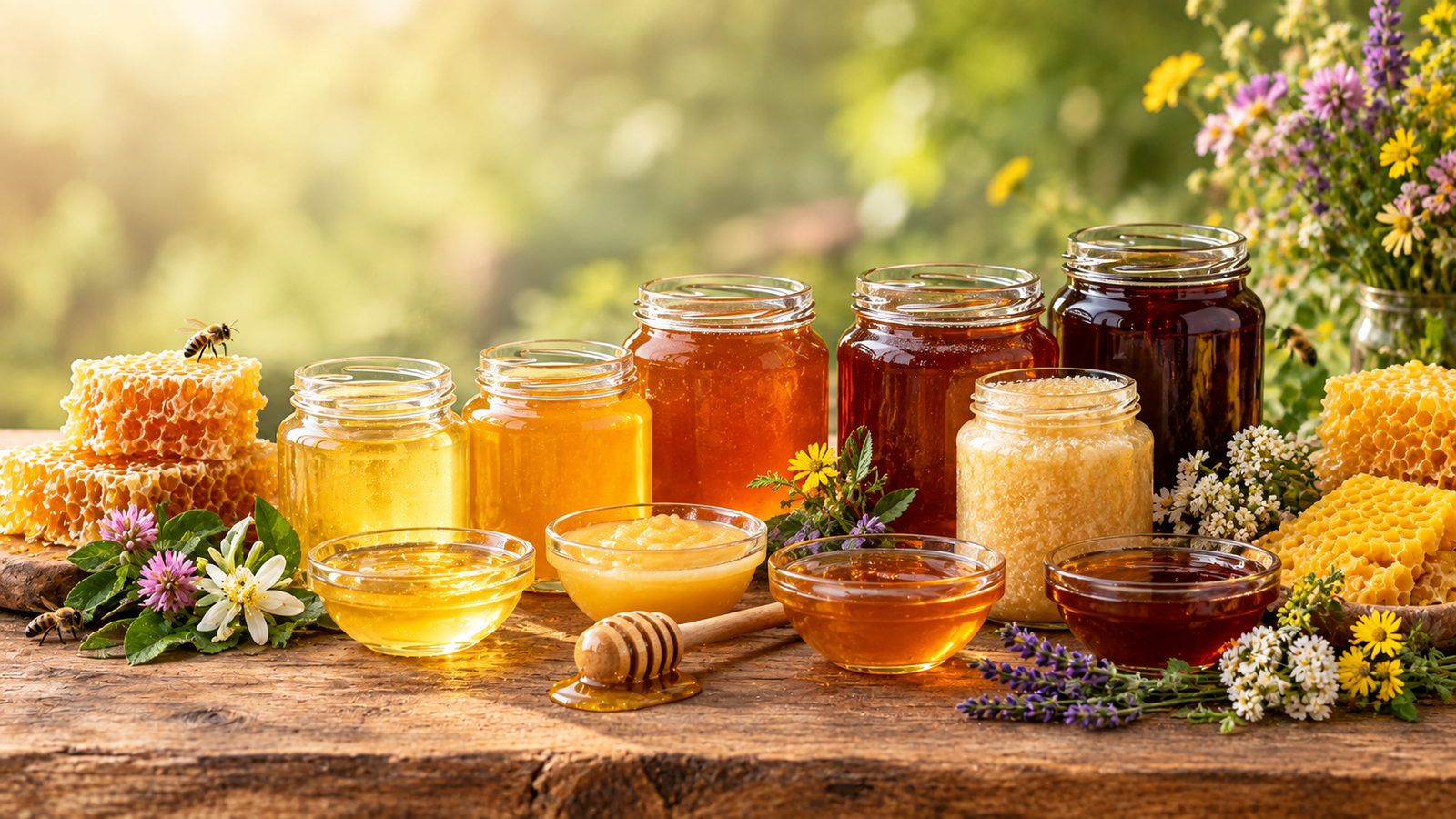
Honey may look like a simple golden sweetener, but there are many different types of honey, and each can have its own color, flavor, aroma, texture, and characteristics.
The differences mainly come from the flowers and plants that bees visit to collect nectar. Clover honey, for example, tends to be mild and delicate, while buckwheat honey has a much darker color and stronger flavor. Honey can also be classified by how it is processed or sold, such as raw honey, creamed honey, and comb honey.
Whether you’re looking for honey for tea, baking, cooking, spreading on toast, or simply exploring new flavors, understanding the different types of honey can help you choose the right variety.
What Are the Different Types of Honey?
The different types of honey can be classified in several ways.
The most common classification is by floral source, meaning the plant or group of plants from which bees collected nectar. Honey can also be classified by processing method, texture, or whether it comes from one dominant floral source or many.
Some popular types and forms of honey include:
- Clover honey
- Wildflower honey
- Acacia honey
- Alfalfa honey
- Buckwheat honey
- Manuka honey
- Eucalyptus honey
- Orange blossom honey
- Tupelo honey
- Lavender honey
- Avocado honey
- Sage honey
- Sunflower honey
- Chestnut honey
- Fireweed honey
- Creamed honey
- Comb honey
- Raw honey
- Crystallized honey
- Hot honey
Not all of these are technically different floral varieties. For example, creamed honey describes texture, while hot honey is flavored or infused honey.
Different Types of Honey at a Glance
| Type of honey | Typical color | Flavor profile | Common uses |
|---|---|---|---|
| Clover | Light amber | Mild and sweet | Everyday use, tea, baking |
| Wildflower | Light to dark amber | Floral and varied | Cooking and baking |
| Acacia | Very light | Delicate and floral | Tea, yogurt, desserts |
| Alfalfa | Light amber | Mild and herbal | Cooking, baking |
| Buckwheat | Dark brown | Strong, earthy, malty | Baking, sauces |
| Manuka | Golden to dark amber | Rich and earthy | Spreading, eating directly |
| Eucalyptus | Amber | Herbal and distinctive | Tea, toast, cooking |
| Orange blossom | Light to golden amber | Floral and citrusy | Drinks, desserts |
| Tupelo | Light golden | Mild and buttery | Toast, biscuits, desserts |
| Lavender | Light amber | Floral and aromatic | Tea, desserts |
| Avocado | Dark amber | Rich and earthy | Sauces, cheese, savory foods |
| Chestnut | Amber to dark brown | Woody and slightly bitter | Cheese, sauces |
| Sunflower | Yellow to golden | Mild and floral | Breakfast foods, baking |
| Fireweed | Very light to amber | Delicate and buttery | Tea, toast, desserts |
The exact characteristics can vary according to geography, weather, season, plant species, and how the honey was harvested and processed.
1. Clover Honey
Clover honey is one of the best-known honey varieties and is widely produced in regions where clover grows.
It generally has a mild, familiar sweetness that makes it one of the most versatile honeys.
Flavor: Mild, sweet, and lightly floral
Color: Light golden to light amber
Texture: Usually smooth and liquid when fresh
Best uses for clover honey
Clover honey works well for:
- Tea and coffee
- Toast
- Yogurt
- Cereal
- Baking
- Sauces and marinades
- Everyday sweetening
Because its flavor is relatively mild, it can add sweetness without overpowering other ingredients.
2. Wildflower Honey
Wildflower honey is produced from nectar collected from a mixture of wildflowers rather than one dominant cultivated crop.
Its characteristics can vary significantly from one location and season to another.
Flavor: Floral, complex, and variable
Color: Light amber to dark amber
Texture: Liquid or crystallized
Wildflower honey from one region can taste noticeably different from wildflower honey produced somewhere else because the available flowers are different.
Best uses for wildflower honey
It is particularly useful for:
- Baking
- Bread
- Marinades
- Sauces
- Tea
- Breakfast foods
Its stronger flavor can add more character to recipes than mild table honey.
3. Acacia Honey
Acacia honey is commonly associated with nectar from black locust trees, which are sometimes called false acacia.
It is known for its very light color and delicate flavor.
Flavor: Mild, delicate, floral, and lightly vanilla-like
Color: Very pale yellow to nearly transparent
Texture: Usually slow to crystallize
Acacia honey is particularly useful when you want sweetness without a strong honey flavor.
Best uses for acacia honey
Try it in:
- Tea
- Yogurt
- Cereal
- Fruit
- Desserts
- Drinks
- Light sauces
4. Alfalfa Honey
Alfalfa honey comes from nectar collected from alfalfa blossoms.
It generally has a mild flavor and relatively light color.
Flavor: Mild, fresh, and slightly herbal
Color: Light amber
Texture: Smooth and liquid when fresh
Best uses for alfalfa honey
It can be used in:
- Tea
- Salad dressings
- Sauces
- Baking
- Bread
- Breakfast foods
Its mild taste makes it suitable for recipes where you don’t want the honey to dominate.
5. Buckwheat Honey
Buckwheat honey is one of the most distinctive dark honey varieties.
It is made from nectar collected from buckwheat flowers and generally has a much stronger flavor than lighter honeys.
Flavor: Rich, earthy, malty, and molasses-like
Color: Dark amber to deep brown
Aroma: Strong and distinctive
Best uses for buckwheat honey
Because of its bold flavor, it works particularly well in:
- Bread
- Cakes
- Honey cookies
- Barbecue sauces
- Marinades
- Glazes
- Savory dishes
If you prefer a strong, robust honey, buckwheat is worth trying.
6. Manuka Honey
Manuka honey is primarily associated with New Zealand and is produced from nectar of the manuka plant.
It is one of the most recognizable specialty honey varieties.
Flavor: Rich, earthy, herbal, and sometimes slightly bitter
Color: Golden to dark amber
Texture: Smooth and thick
Manuka honey is commonly sold with ratings such as UMF or MGO, which are used to identify particular characteristics of the product.
Common uses
Manuka honey can be enjoyed:
- On toast
- With yogurt
- In breakfast foods
- In drinks
- By itself
It is also widely marketed for health-related uses, but specific medical claims should not be assumed simply because a honey is labeled Manuka.
7. Eucalyptus Honey
Eucalyptus honey is produced from nectar collected from eucalyptus blossoms.
Different eucalyptus species can produce honey with noticeably different characteristics.
Flavor: Herbal, floral, woody, and sometimes slightly menthol-like
Color: Light amber to dark amber
Aroma: Distinctive and herbal
Best uses for eucalyptus honey
It can be used in:
- Tea
- Toast
- Baking
- Sauces
- Marinades
Its distinctive flavor makes it more suitable for people who enjoy stronger or herbal-tasting honey.
8. Orange Blossom Honey
Orange blossom honey is produced from the blossoms of citrus trees, especially orange trees.
It is known for its floral aroma combined with subtle citrus notes.
Flavor: Sweet, floral, and lightly citrusy
Color: Light golden to amber
Aroma: Fresh and floral
Best uses for orange blossom honey
It works especially well in:
- Tea
- Lemonade
- Desserts
- Pancakes
- Biscuits
- Pastries
- Salad dressings
Its citrus character can complement recipes containing orange, lemon, or other fruits.
9. Tupelo Honey
Tupelo honey is associated with tupelo trees and is particularly known from certain areas of the southeastern United States.
It generally has a mild and pleasant flavor.
Flavor: Mild, buttery, floral, and fruity
Color: Light golden
Texture: Often remains liquid for relatively long periods
Best uses for tupelo honey
It is well suited to:
- Toast
- Biscuits
- Tea
- Yogurt
- Desserts
- Eating directly
Because of its delicate flavor, it can be a good choice when you don’t want an overpowering honey taste.
10. Lavender Honey
Lavender honey comes from bees collecting nectar from lavender flowers.
It can have a recognizable floral aroma and subtle herbal notes.
Flavor: Floral, aromatic, sweet, and lightly herbal
Color: Pale gold to amber
Best uses for lavender honey
It pairs nicely with:
- Tea
- Yogurt
- Desserts
- Ice cream
- Fruit
- Soft cheeses
11. Avocado Honey
Avocado honey comes from nectar produced by avocado blossoms.
Despite its name, it generally does not taste like the avocado fruit.
Flavor: Rich, earthy, malty, and mildly fruity
Color: Amber to dark amber
Best uses for avocado honey
Its stronger flavor makes it suitable for:
- Toast
- Cheese
- Sauces
- Marinades
- Savory recipes
- Salad dressings
12. Sage Honey
Sage honey is produced from nectar collected from sage plants.
The exact flavor can differ depending on the sage species and growing region.
Flavor: Mild, floral, and lightly herbal
Color: Pale to light amber
It is useful in:
- Tea
- Toast
- Baking
- Desserts
- Cooking
13. Sunflower Honey
Sunflower honey comes from sunflower blossoms.
It typically has a bright golden appearance and a mild flavor.
Flavor: Mild, sweet, and lightly floral
Color: Yellow to golden
Sunflower honey can be used in:
- Tea
- Breakfast foods
- Baking
- Yogurt
- Bread
- Sauces
It may also crystallize relatively quickly depending on its composition and storage conditions.
14. Chestnut Honey
Chestnut honey is produced from chestnut blossoms.
Unlike very mild honey varieties, it often has a stronger flavor with a noticeable bitter or woody character.
Flavor: Woody, earthy, malty, and slightly bitter
Color: Amber to dark brown
Best uses for chestnut honey
Its stronger flavor can pair particularly well with:
- Strong cheeses
- Bread
- Sauces
- Roasted foods
- Savory dishes
15. Fireweed Honey
Fireweed honey comes from nectar collected from fireweed flowers.
It is generally considered a delicate specialty honey.
Flavor: Mild, floral, and buttery
Color: Very light to pale amber
It can be enjoyed with:
- Toast
- Tea
- Yogurt
- Fruit
- Desserts
Honey Types by Floral Source
One of the most useful ways to understand different types of honey is to look at their floral source.
Monofloral Honey
Monofloral honey is honey produced primarily from one dominant floral source.
Examples include:
- Clover honey
- Buckwheat honey
- Orange blossom honey
- Tupelo honey
- Manuka honey
Monofloral does not necessarily mean that bees visited only one species of flower. Bees can visit many plants, but one floral source is dominant enough to give the honey its characteristic identity.
Multifloral Honey
Multifloral honey comes from nectar collected from several different types of flowers.
Wildflower honey is a common example.
The flavor can change depending on the local plants, season, weather, and location.
Honey Types by Color
Honey can range from almost transparent to very dark brown.
Light Honey
Light-colored honey often has a delicate flavor.
Examples include:
- Acacia
- Clover
- Tupelo
- Fireweed
- Some orange blossom honey
Medium-Colored Honey
Medium amber honey often has a more noticeable floral or caramel-like flavor.
Examples can include:
- Alfalfa
- Sunflower
- Some wildflower honey
- Some eucalyptus honey
Dark Honey
Dark honey commonly has a stronger and more complex flavor.
Examples include:
- Buckwheat
- Chestnut
- Avocado
- Some wildflower honey
However, color is only a general guide. It does not by itself determine honey quality.
Does Darker Honey Mean Stronger Flavor?
Often, but not always.
In general, darker honeys tend to have more intense flavors, while lighter honeys tend to be milder and more delicate.
However, the floral source is the more important factor. Two honeys with similar colors can still taste quite different.
Honey Types by Texture
Honey can also be categorized according to its physical form.
Liquid Honey
Liquid honey is the familiar smooth honey sold in jars and squeeze bottles.
It is commonly used for:
- Tea
- Toast
- Baking
- Cooking
- Sauces
- Desserts
Crystallized Honey
Honey naturally crystallizes when some of its sugars form crystals.
Crystallization is a natural process and does not automatically mean that honey has spoiled.
Different honey varieties crystallize at different rates.
Creamed Honey
Creamed honey is not a separate floral variety. Instead, it describes honey that has been processed to produce a fine, smooth crystal structure.
It has a thick, spreadable texture.
Common uses
- Toast
- Biscuits
- Bagels
- Pancakes
- Breakfast foods
Comb Honey
Comb honey is honey that remains inside the beeswax cells built by honey bees.
It contains honey together with the beeswax comb.
Can you eat honeycomb?
Yes. Honeycomb can be eaten. Some people chew the wax and swallow it, while others chew it to extract the honey and then remove the remaining wax.
Honeycomb can be served:
- On toast
- With cheese
- On desserts
- With fruit
- On a charcuterie board
Raw Honey vs. Processed Honey
The term raw honey refers primarily to how honey has been handled and processed rather than its floral source.
Raw honey is generally minimally processed after extraction. Depending on the producer, it may be strained or filtered to remove larger particles while avoiding extensive heat treatment.
Processed honey may undergo additional filtration, heating, or other commercial processing.
The exact processing method varies between producers, so checking the product label is important.
Is Raw Honey a Different Type of Honey?
Not exactly.
Raw honey can be:
- Clover
- Wildflower
- Acacia
- Buckwheat
- Manuka
- Or another floral variety
In other words, raw describes processing, while clover, buckwheat, and wildflower describe floral source.
Pure Honey vs. Raw Honey
These terms are also different.
Pure honey generally refers to honey that contains honey as the sole ingredient rather than added sweeteners or syrups.
Raw honey refers to how the honey has been processed.
Therefore, honey can be pure without being raw.
Organic Honey vs. Raw Honey
Organic and raw are also not interchangeable terms.
Organic honey refers to honey produced under applicable organic certification standards.
Raw honey refers to the degree and type of processing.
Therefore, a honey can be:
- Raw but not organic
- Organic but processed
- Both raw and organic
The exact requirements for organic honey depend on the certification system and country.
What Is Hot Honey?
Hot honey is honey that has been infused or combined with chili peppers or other spicy ingredients.
It is different from naturally flavored floral honey because the heat comes from an added ingredient rather than the nectar source.
Hot honey is commonly used as a finishing ingredient.
Try it on:
- Pizza
- Fried chicken
- Cornbread
- Roasted vegetables
- Grilled fruit
- Ice cream
- Goat cheese
- Sandwiches
What Is the Best Type of Honey?
There is no single best type of honey for everyone.
The best choice depends on the flavor you prefer and how you plan to use it.
Best for everyday use
Clover or acacia honey
Both have relatively mild flavors and work well in drinks, breakfast foods, and cooking.
Best for strong flavor
Buckwheat or chestnut honey
These varieties have bold, distinctive flavors that can stand out in recipes.
Best for floral flavor
Orange blossom or lavender honey
These are good options when you want a noticeable floral aroma.
Best for baking
Clover, wildflower, or buckwheat honey
The choice depends on whether you want a mild sweetness or a stronger honey flavor.
Best for spreading
Creamed honey
Its thick, smooth consistency makes it especially easy to spread on bread and toast.
Best for eating with the comb
Comb honey
It provides both honey and beeswax in the original comb structure.
How to Choose Between Different Types of Honey
When choosing honey, consider these five factors.
1. Flavor
Do you prefer mild or strong flavors?
Choose clover or acacia for something subtle, or buckwheat and chestnut for something more intense.
2. Intended use
Think about what you are going to do with the honey.
A delicate honey may be ideal for tea, while a stronger variety can work better in sauces and marinades.
3. Floral source
If you want a recognizable flavor profile, look for honey labeled with a specific floral source.
4. Processing
If processing matters to you, check whether the label identifies the honey as raw, filtered, unfiltered, or otherwise processed.
5. Texture
Choose liquid honey for pouring and mixing, creamed honey for spreading, or comb honey for a more traditional presentation.
Why Do Different Types of Honey Taste Different?
The flavor of honey is affected by several factors, including:
- The plants bees visit
- Floral nectar composition
- Geographic location
- Weather
- Season
- Soil and vegetation
- Time of harvest
- Storage conditions
- Processing methods
This is why two jars labeled with the same general type of honey can still have subtle differences in flavor.
Do Different Types of Honey Have Different Colors?
Yes.
Honey can range from nearly transparent to deep brown.
The floral source is one of the major factors affecting color. Processing and storage can also influence appearance.
Generally:
Light honey → milder flavor
Dark honey → stronger flavor
But this is only a general rule, not a guarantee.
Do All Types of Honey Crystallize?
No.
Different honeys crystallize at different rates.
Crystallization depends partly on the balance of glucose and fructose in the honey, as well as temperature and storage conditions.
Some varieties may remain liquid for a long time, while others crystallize relatively quickly.
Crystallized honey has not necessarily gone bad.
Frequently Asked Questions About Different Types of Honey
How many types of honey are there?
There are hundreds of honey varieties and regional types around the world. The exact number is difficult to determine because honey can vary according to plant source, geography, season, and production methods.
What is the most common type of honey?
Clover honey is one of the most widely known and commonly available honey varieties, especially in North America. Wildflower honey is also widely sold.
What are the main types of honey?
Some of the best-known types include clover, wildflower, acacia, alfalfa, buckwheat, Manuka, eucalyptus, orange blossom, tupelo, lavender, chestnut, and sunflower honey.
What is the difference between clover and wildflower honey?
Clover honey is primarily associated with clover nectar and generally has a mild, consistent flavor. Wildflower honey comes from multiple floral sources, so its flavor and color can vary considerably by location and season.
What is the difference between light and dark honey?
Light honey generally has a milder flavor, while dark honey often has a stronger and more complex taste. However, color alone does not determine quality.
What is the difference between raw honey and regular honey?
Raw honey refers to honey that has undergone limited processing, while “regular” or processed honey may undergo additional heating, filtration, or other commercial processing. Neither term identifies the floral source.
Is creamed honey a different type of honey?
Creamed honey is better described as a form or texture of honey rather than a floral variety. It is produced with a fine crystal structure that gives it a smooth, spreadable consistency.
Is wildflower honey better than clover honey?
Neither is universally better. Clover honey is usually mild and versatile, while wildflower honey can have a more varied and robust flavor. The better choice depends on your preference and intended use.
Which type of honey is best for baking?
Clover and wildflower honey are versatile choices for baking, while buckwheat honey is useful when you want a stronger honey flavor.
Which honey is best for tea?
Mild varieties such as clover and acacia work particularly well in tea because they add sweetness without overpowering the drink.
Can honeycomb be eaten?
Yes. Honeycomb consists of beeswax cells filled with honey and can be eaten. It can be served on toast, with cheese, fruit, or desserts.
Does honey expire?
Honey has an exceptionally long shelf life when stored properly, although its color, flavor, aroma, and texture can change over time. Crystallization is natural and does not necessarily mean honey has spoiled.
Final Thoughts on Different Types of Honey
The different types of honey offer a remarkable range of flavors, colors, aromas, and textures.
Clover and acacia honey are mild and versatile, wildflower honey offers changing flavors based on its floral environment, and buckwheat and chestnut honey provide stronger, richer profiles. Specialty varieties such as Manuka, tupelo, and lavender offer their own distinctive characteristics.
Honey can also be classified in other ways. Monofloral and multifloral describe the primary floral sources, while raw and processed describe handling and processing. Liquid, crystallized, creamed, and comb honey describe physical forms or presentation.
There is no single best honey for every situation. The right choice depends on the flavor you enjoy, the recipe you’re making, and whether you prefer a particular floral source, texture, or processing method.
Exploring different varieties is one of the best ways to appreciate just how much honey can differ from one hive, region, and flower source to another.
Quick Takeaway
If you want a mild everyday honey, start with clover or acacia. For a strong, robust flavor, try buckwheat or chestnut. For a floral and aromatic honey, orange blossom or lavender are good choices. If you prefer a spreadable texture, try creamed honey, while comb honey offers honey in its traditional beeswax structure.
The world of honey is much more diverse than a single bottle of golden sweetness.
