

Bees are beneficial insects that pollinate flowering plants and support food production. However, their presence around homes, outdoor dining areas, children’s play spaces, and building structures can sometimes create problems, particularly when they establish nests in places where people frequently gather.
If you want to know how to prevent bee problems, the first step is understanding why bees visit your property and what type of bee is causing the problem. Honey bees, bumblebees, carpenter bees, and solitary ground-nesting bees have different nesting habits, so the prevention method that works for one species may not work for another.
The most effective ways to prevent unwanted bees include removing exposed sugary foods, sealing unused building openings, protecting wooden structures, managing water sources, and inspecting potential nesting locations. If a colony has already established itself inside a building, professional removal may be necessary before the entrance is sealed.
This guide explains 15 practical ways to prevent bees around your house and garden, how to identify common bee-related problems, which prevention methods work best, and how to protect people without unnecessarily killing beneficial pollinators.
1. Remove Food Sources That Attract Bees
One of the simplest ways to prevent bees from gathering around your home is to remove exposed food and sugary substances.
Honey bees collect nectar and other resources from their surroundings. Sweet-smelling foods and drinks can attract foraging bees, particularly when they are left uncovered outdoors.
Common attractants include:
- Fruit juice and sugary soft drinks.
- Honey, syrup, and jam.
- Ripe or damaged fruits.
- Cakes, sweets, and desserts.
- Food scraps and sticky spills.
- Overripe mangoes, bananas, and other fallen fruits.
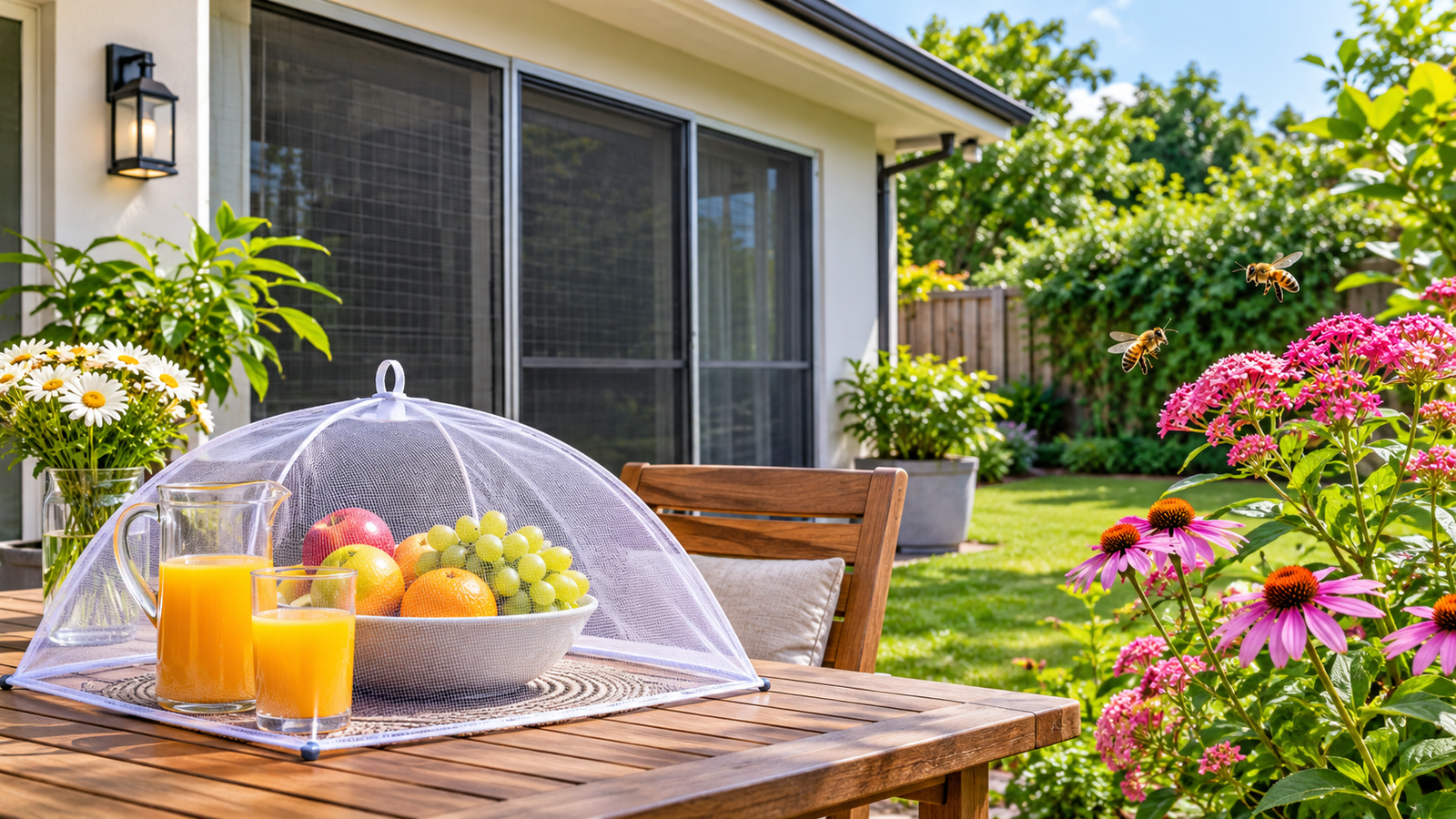
To reduce unwanted visits, cover food containers, clean outdoor tables after meals, and dispose of food waste in bins with secure lids.
Practical example: If several bees repeatedly visit your outdoor dining table, check whether someone has left a glass of juice, an uncovered fruit bowl, or a sticky drink spill nearby. Removing these attractants can make the area less appealing.
However, remember that honey bees primarily collect nectar and pollen from flowers. Removing household food waste will not stop bees from visiting flowering plants elsewhere on your property.
2. Seal Unused Holes and Openings Around Your House
Honey bees naturally look for protected cavities where they can establish colonies. Buildings sometimes provide suitable nesting spaces because of gaps around roofs, walls, ceilings, and utility installations.
Inspect the exterior of your house for:
- Cracks in exterior walls.
- Openings around electrical wires.
- Gaps around plumbing pipes.
- Holes in roof eaves.
- Damaged window frames.
- Unused ventilation openings.
- Gaps around chimneys.
- Hollow spaces behind loose exterior panels.
Use suitable exterior caulk, mortar, weatherproof fillers, or protective mesh to close unused openings.
Pay particular attention to small openings that lead into larger hollow spaces. The Mississippi State University Extension explains that honey bees can use surprisingly small access openings to reach protected building cavities.
Important: Never seal an opening while bees are actively entering and leaving it. An established colony may become trapped inside, and bees may find their way into indoor spaces. Arrange professional removal first.
3. Protect Wooden Structures From Carpenter Bees
If large bees frequently hover around wooden fences, roof edges, wooden furniture, or outdoor structures, carpenter bees may be responsible.
Carpenter bees are different from honey bees. They do not build large social colonies inside honeycomb-filled cavities. Female carpenter bees excavate tunnels in wood to create nesting galleries for their offspring.
You may recognize carpenter bee activity through:
- Large bees flying around wooden surfaces.
- Almost perfectly round holes in timber.
- Small piles of sawdust beneath entrance holes.
- Repeated activity around the same wooden structure.
To discourage carpenter bees:
- Paint exposed wooden surfaces.
- Maintain protective exterior finishes.
- Fill cracks and existing damage before repainting.
- Replace severely damaged timber when necessary.
- Consider non-wood materials for vulnerable exterior structures.
Painted and well-maintained wood is generally less attractive to carpenter bees than untreated or weathered wood.
Example: If carpenter bees repeatedly bore into an untreated wooden fence, repairing cracks and applying a suitable protective paint can reduce opportunities for new nesting.
Do not confuse carpenter bees with bumblebees. Carpenter bees generally have a shiny, relatively hairless abdomen, while bumblebees have hairy abdomens.
Source: University of Maryland Extension and Cornell Integrated Pest Management.
4. Keep Outdoor Food and Drinks Covered
Outdoor dining areas can attract bees because they provide access to sugary drinks, fruits, and food residue.
This is particularly relevant for households, restaurants, picnic areas, and outdoor events.
Follow these precautions:
- Use covers for fruit bowls and food containers.
- Keep juice and soft drinks in closed bottles.
- Use cups with lids when drinking outdoors.
- Clean tables immediately after eating.
- Remove leftover fruits and desserts.
- Avoid leaving honey and sugary sauces uncovered.
Practical example: If you regularly have bees around a garden table during breakfast, replace open juice glasses with covered cups and clean the table after eating.
These changes reduce accidental encounters without requiring chemicals or killing beneficial insects.
5. Manage Water Sources Around Your Property
Bees require water for different colony activities, including cooling their nests and maintaining suitable conditions inside the hive.
As a result, they may visit leaking taps, dripping pipes, water containers, and other sources of moisture.
If bees frequently gather around a particular water source:
- Repair leaking outdoor taps.
- Fix damaged pipes and hoses.
- Cover water storage containers.
- Remove unnecessary open containers.
- Clean areas where water accumulates.
- Keep avoidable water sources away from busy seating areas.
Important distinction: Bees visiting a water source do not necessarily mean there is a hive nearby. Foraging workers may travel considerable distances between their colony and available resources.
If you keep livestock or provide water for other wildlife, do not eliminate essential water supplies simply to discourage bees. Instead, consider positioning them away from areas where people frequently gather.
6. Arrange Your Garden to Reduce Unwanted Bee Encounters
Flowering plants naturally attract bees because they provide nectar and pollen.
If you want fewer bees around your patio, doorway, swimming area, or children’s play space, consider changing where you position attractive flowering plants.
For example:
- Keep heavily flowering plants away from entrances.
- Place flower beds away from outdoor dining areas.
- Avoid putting attractive flowering containers beside children’s play equipment.
- Maintain clear walking paths between garden areas.
- Use non-flowering ornamental plants in locations where you want fewer bee visits.
However, removing all flowering plants is neither necessary nor an effective way to eliminate bees from your property.
Bees can travel between flowers, nesting locations, and water sources. The goal should be to reduce encounters in specific areas while preserving pollinator-friendly parts of the garden.
7. Install Window Screens and Protective Mesh
Bees sometimes enter houses through open windows, doors, and ventilation spaces.
Installing appropriate insect screens can reduce the likelihood of bees entering indoor areas.
Consider screening:
- Bedroom windows.
- Kitchen windows.
- Bathroom ventilation openings.
- Roof ventilation spaces.
- Other frequently opened windows.
Inspect screens regularly for tears, loose edges, and gaps.
A properly fitted screen should allow adequate airflow while preventing larger insects from entering.
This method is especially useful in warm climates where people frequently leave windows open for ventilation.
8. Remove Unnecessary Nesting Opportunities
Different bee species use different nesting locations.
Honey bees generally establish colonies in enclosed cavities, carpenter bees excavate tunnels in wood, and many solitary bees nest in the ground.
Inspect your property for potential nesting spaces, including:
- Hollow wooden posts.
- Abandoned containers.
- Unused equipment.
- Gaps in sheds and garages.
- Damaged roof cavities.
- Unused building openings.
- Exposed wooden structures.
Cover or repair unused cavities where appropriate.
However, avoid removing natural nesting habitats indiscriminately. Many solitary native bees are important pollinators and do not pose the same risks as an established honey bee colony beside a busy entrance.
9. Prevent Ground-Nesting Bees From Becoming a Problem
Not all bees build nests inside trees, roofs, or wooden structures.
Many solitary bee species excavate underground nesting tunnels in exposed, well-drained soil.
You may notice small holes in the ground, sometimes surrounded by little mounds of loose soil. During their nesting period, individual bees may repeatedly enter and leave these openings.
Before taking action, determine whether the insects are actually bees. Ants, wasps, and other insects can also create holes in the ground.
If the bees are nesting in an area that people rarely use, leaving them undisturbed is often the best option.
If their nesting area is directly beside a frequently used walkway, consider redirecting foot traffic or using a temporary barrier.
Do not flood underground nests, pour petrol into the ground, or apply unapproved chemicals.
10. Avoid Disturbing Existing Bee Colonies
Bees can become defensive when they believe their colony is threatened.
Actions that may provoke defensive behaviour include:
- Hitting a hive.
- Throwing stones at a swarm.
- Shaking branches containing bees.
- Attempting to block an active hive entrance.
- Using machinery immediately beside a colony.
- Spraying chemicals directly into a nest.
If you discover a swarm or established colony, maintain a safe distance and keep children and pets away.
A honey bee swarm temporarily resting on a tree branch is not necessarily a permanent colony. Swarming is a natural part of honey bee reproduction, during which a queen and a large group of workers leave an existing colony to establish another one.
If a swarm is safely away from people, it may move on without intervention. If it poses a risk, contact a qualified beekeeper or bee removal specialist.
The University of Georgia Cooperative Extension provides specific guidance for dealing with swarms and honey bee colonies inside walls.
11. Inspect Your Property Regularly
Regular inspections help you discover potential bee nesting locations before they become established.
Check your property for:
- Repeated bee activity around roof openings.
- Bees entering the same wall cavity.
- Carpenter bee holes in wooden surfaces.
- Bee activity around hollow fence posts.
- Swarms resting in trees.
- Unused containers that provide sheltered cavities.
One useful sign of an established honey bee colony is repeated movement of bees into and out of the same building opening.
You may also notice workers returning with pollen on their hind legs.
Texas A&M Honey Bee Lab recommends inspecting buildings and surrounding areas regularly and paying attention to potential nesting locations.
Practical inspection routine: Walk around your house and inspect roof edges, wall openings, sheds, fences, and outdoor structures. Do not touch suspected nests. Record where activity occurs and arrange professional assessment if you identify a colony.
12. Use Professional Bee Removal for Established Colonies
Preventive measures are most effective before bees establish a permanent nest.
If a colony is already living inside a wall, ceiling, roof, or hollow structure, simply blocking its entrance will not solve the problem.
Professional removal may involve:
- Identifying the bee species and nest location.
- Assessing the risks to occupants and surrounding structures.
- Selecting an appropriate removal method.
- Removing the colony and comb where necessary.
- Removing remaining honey and wax.
- Cleaning the affected cavity.
- Repairing the opening to prevent future nesting.
Leaving honeycomb and wax inside a building can create additional problems, including leaking honey, attracting other pests, and encouraging future bees to investigate the cavity.
For this reason, professional removal should address both the bees and the nest material.
13. Use Natural Prevention Methods Without Killing Bees
If you want to keep bees away from specific areas without harming them, concentrate on environmental changes rather than unproven chemical or household repellents.
Useful non-lethal approaches include:
- Covering sugary foods.
- Keeping rubbish bins closed.
- Repairing water leaks.
- Installing insect screens.
- Protecting vulnerable wooden surfaces.
- Sealing unused building cavities.
- Moving attractive flowers away from busy areas.
- Keeping children and pets away from established colonies.
Some people recommend vinegar, cinnamon, peppermint oil, and other strong-smelling substances as bee repellents. However, there is insufficient reliable evidence that these methods provide consistent, lasting protection.
Avoid spraying substances directly onto bees or flowers.
14. Prevent Bee Stings Around Your Home
Preventing bees from visiting your property is different from preventing bee stings.
Even a garden with few flowers may have bees passing through. The most important precaution is avoiding actions that make bees feel threatened.
To reduce the risk of stings:
- Wear shoes when walking through grassy areas.
- Avoid handling bees.
- Do not disturb nests or swarms.
- Keep food and drinks covered.
- Avoid swatting at individual bees.
- Teach children not to throw objects at colonies.
- Keep a safe distance from visibly defensive bees.
If bees begin attacking, move quickly toward an enclosed building or vehicle. Protect your face and head, and do not remain near the colony.
A bee sting can trigger a serious allergic reaction. Difficulty breathing, swelling of the tongue or throat, faintness, or other severe allergic symptoms require immediate emergency medical care. Use prescribed epinephrine according to your emergency instructions.
15. Choose the Right Prevention Method for the Type of Bee
One of the biggest mistakes people make is treating every bee problem in the same way.
A method that works for honey bees nesting in a wall may not prevent carpenter bees from excavating wooden structures.
Use this guide to identify the likely problem and select a suitable response.
| Bee type | Typical nesting location | Recommended prevention |
|---|---|---|
| Honey bee | Hollow trees, walls, roofs, building cavities | Seal unused cavities after professional removal |
| Bumblebee | Sheltered cavities and abandoned burrows | Avoid disturbing nests and redirect foot traffic |
| Carpenter bee | Wooden posts, fences, roof timbers | Paint, maintain, and repair exposed wood |
| Ground-nesting solitary bee | Exposed soil and underground tunnels | Preserve suitable habitat and redirect foot traffic where needed |
| Mason bee | Pre-existing small cavities and nesting tubes | Manage artificial nesting structures and leave beneficial nests undisturbed where safe |
Remember that these are general patterns. Bee species vary by region, and not every bee follows exactly the same nesting behaviour.
Common Mistakes to Avoid When Preventing Bees
Some prevention attempts can create more problems than they solve.
| Mistake | Why it is a problem | Better approach |
|---|---|---|
| Blocking an active hive entrance | Traps bees or redirects them indoors | Arrange professional removal first |
| Pouring petrol into a nest | Creates fire, chemical, and environmental hazards | Use qualified bee removal |
| Removing every flowering plant | Harms pollinators without eliminating bee visits | Rearrange flowering plants |
| Spraying every bee | Unnecessarily kills beneficial insects | Identify the actual problem |
| Ignoring carpenter bee holes | Allows repeated nesting and possible wood damage | Maintain and repair timber |
| Flooding ground nests | Can harm soil organisms and does not provide reliable prevention | Identify the species and redirect foot traffic |
| Leaving honeycomb in walls | Can attract pests and create residue problems | Ensure complete professional nest removal |
Frequently Asked Questions About How to Prevent Bee
1. What is the best way to prevent bees around your house?
The best approach is to remove exposed food attractants, seal unused openings, maintain wooden structures, install window screens, and inspect potential nesting locations regularly. If a colony is already established inside your house, arrange professional removal before sealing the entrance.
2. What smells keep bees away?
Some strong-smelling substances and essential oils are advertised as bee repellents. However, their effectiveness is inconsistent, and they do not provide dependable protection against nesting. Removing attractants and preventing access to nesting spaces are more reliable approaches.
3. How do I prevent bees from coming into my garden?
You cannot completely prevent bees from visiting a flowering garden because flowers naturally provide nectar and pollen. However, you can reduce unwanted encounters by moving attractive flowering plants away from patios, entrances, and children’s play areas.
4. How do I prevent bees from building a hive in my roof?
Inspect roof edges, eaves, and other exterior openings. Seal unused gaps and repair damaged roofing materials. Cover appropriate ventilation openings with protective mesh.
If bees are already entering and leaving the same opening, do not seal it until the colony has been professionally removed.
5. Does vinegar prevent bees?
Vinegar is sometimes suggested as a natural bee repellent, but there is insufficient scientific evidence that it provides reliable, lasting prevention. Do not rely on vinegar to prevent nesting or protect people from defensive bees.
6. Does smoke keep bees away?
Smoke can temporarily affect honey bee behaviour, which is why trained beekeepers sometimes use smokers when inspecting colonies. However, smoke does not permanently prevent bees from returning or establishing nests. Using smoke around buildings can also create a fire hazard.
7. Why do bees keep coming back to my house?
Bees may repeatedly visit your property because they have found flowering plants, water, food residue, or suitable nesting spaces. If bees consistently enter and leave the same opening, an established colony may be present inside a wall or roof.
8. Can I prevent bees without killing them?
Yes. Cover food, repair leaks, install window screens, maintain wooden structures, and seal unused openings. If bees have already established a colony in a building, seek professional removal rather than attempting to destroy the nest.
9. Should I remove flowers to prevent bees?
No. Removing all flowers is unnecessary and does not guarantee that bees will stop visiting. Instead, position attractive flowering plants away from areas where people frequently gather.
10. How do I prevent carpenter bees from damaging my wooden fence?
Maintain the fence by filling cracks and applying suitable paint or protective exterior finishes. Carpenter bees prefer many exposed, unfinished, or weathered wooden surfaces. Repair existing damage and replace severely affected timber where necessary.
11. How can I prevent bees from nesting underground?
First identify the insects and determine whether they are solitary bees. Many ground-nesting bees are beneficial and do not need to be removed. Where nests are beside frequently used paths, redirect foot traffic and leave the nesting area undisturbed.
12. What should I do if bees have already built a hive in my house?
Keep people and pets away from the affected area. Do not block the entrance, burn the nest, or spray household chemicals into the opening. Contact a qualified bee removal specialist who can remove the colony and comb and recommend repairs to prevent another infestation.
Conclusion
Learning how to prevent bee problems requires more than using household repellents or removing flowering plants. You must understand why bees visit your property, which species are involved, and whether they are simply foraging or establishing a nest.
For honey bees, inspect and seal unused building openings after professional removal of any established colony. For carpenter bees, maintain and protect exposed wooden structures. For ground-nesting and other solitary bees, identify the species and avoid unnecessary disturbance.
The most effective long-term approach is to remove unwanted attractants, manage nesting opportunities, protect frequently used spaces, and respond appropriately when a colony is discovered.
By following these preventive measures, you can reduce unwanted bee encounters while protecting the beneficial pollinators that support healthy gardens and ecosystems.
References
- University of Florida IFAS Extension – Bee-Proofing for Florida Citizens.
- Texas A&M Honey Bee Lab – Bee Proofing Your Property.
- Mississippi State University Extension – Prevention and Treatment of Nuisance Honey Bees Around Your Home.
- University of Georgia Cooperative Extension – Honey Bee Swarms and Bees in Walls.
- University of Maryland Extension – Carpenter Bees.
- Cornell Integrated Pest Management – Carpenter Bees.
- University of California Statewide Integrated Pest Management Program – Carpenter Bees.
