

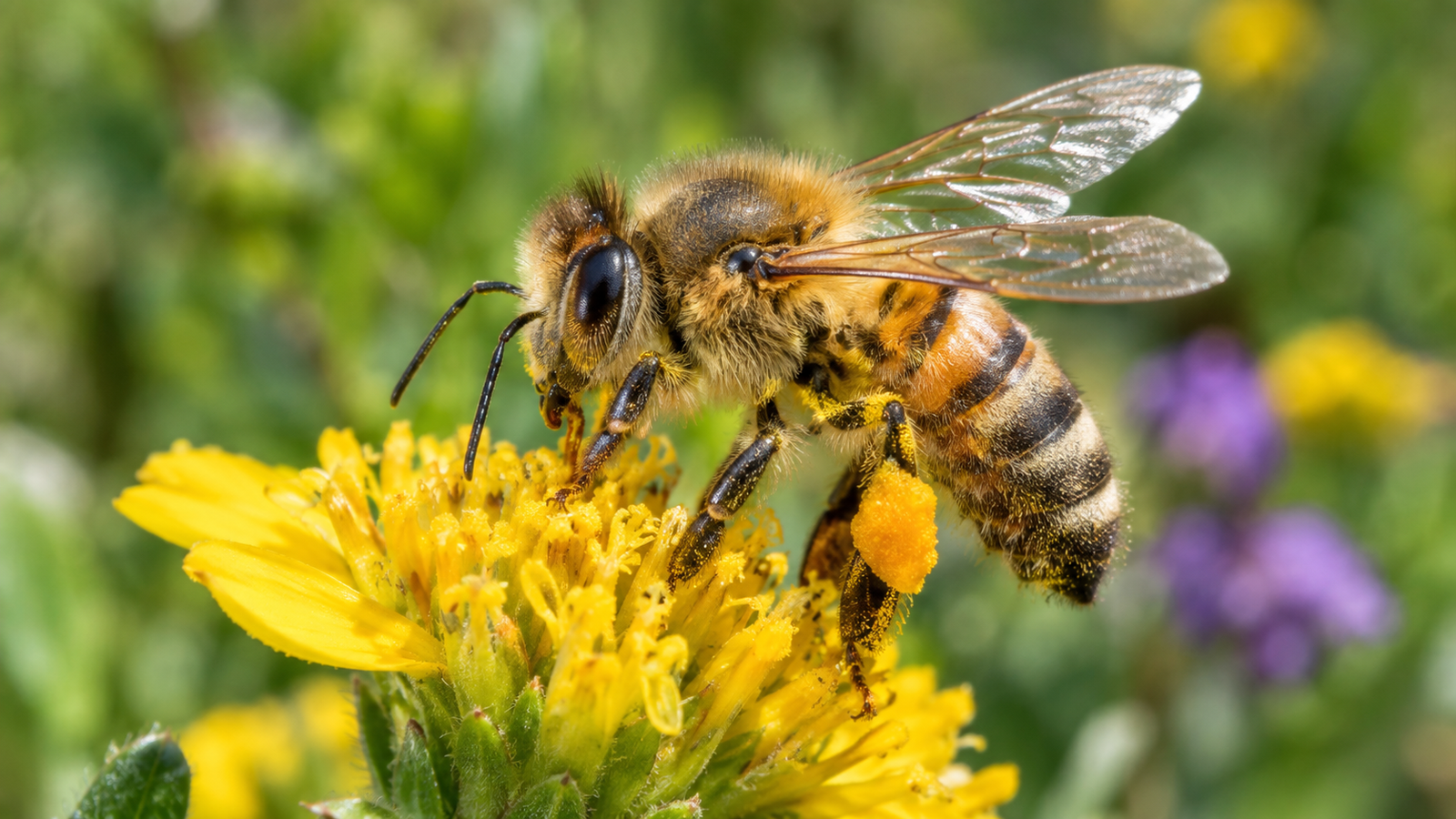
A typical established honey bee colony can contain about 20,000 to 60,000 bees, although exceptionally strong colonies may reach 80,000 or more under favorable conditions. The number of bees in a hive is not fixed and changes throughout the year depending on the season, food availability, queen productivity, colony health, weather, swarming, and beekeeping practices.
Most of the bees in a healthy colony are female worker bees. A typical hive also has one queen and, during the breeding season, hundreds to thousands of male drones.
During spring and summer, the colony population usually grows as the queen lays more eggs and food becomes abundant. In fall and winter, the population generally declines as the colony reduces brood production and conserves its food reserves.
How Many Bees Are Usually in a Hive?
There is no single number that applies to every hive.
An established honey bee colony can contain tens of thousands of adult bees, with population size changing considerably during the year.
A useful general estimate is:
| Season | Approximate colony population |
|---|---|
| Winter | 10,000–20,000 bees |
| Early spring | 15,000–30,000 bees |
| Late spring | 30,000–50,000 bees |
| Summer | 40,000–60,000+ bees |
| Fall | 20,000–50,000 bees |
These figures are approximate rather than strict limits. Colony size varies according to climate, bee genetics, available food, queen performance, disease, parasites, and other conditions.
Some exceptionally strong colonies can contain 80,000 or more bees, while small or weakened colonies may contain far fewer.
How Many Bees Live in a Hive in Summer?
Summer is generally the period when a healthy honey bee colony reaches its largest population.
A strong hive may contain approximately 40,000 to 60,000 bees or more during the peak season.
There is usually plenty of nectar and pollen available during periods of abundant flowering. This gives the colony the food and resources needed to raise large numbers of young bees.
The growing population allows the colony to:
- Collect large amounts of nectar and pollen
- Produce and store honey
- Raise more brood
- Build new comb
- Defend the hive
- Maintain the temperature inside the colony
- Prepare food reserves for periods when flowers are scarce
The exact population peak depends on the local climate and flowering season.
How Many Bees Live in a Hive in Winter?
The population of a honey bee colony usually decreases substantially during winter.
A colony may contain roughly 10,000 to 20,000 bees during winter, although this varies by location and colony condition.
The colony does not need as many foraging bees because flowers may be scarce or unavailable. Instead, the bees concentrate on conserving energy and maintaining the colony through the colder period.
Honey bees form a winter cluster around the queen. They consume stored honey to produce energy and generate heat.
The queen also generally reduces her egg-laying activity compared with the peak breeding season.
How Many Bees Live in a Hive in Spring?
Spring is a period of rapid population growth for many honey bee colonies.
As temperatures rise and flowers become available, the queen typically increases egg production. Worker bees collect pollen to provide protein for developing larvae and nectar that can eventually become honey.
A colony that entered winter with around 10,000–20,000 bees can gradually grow into a much larger population during spring.
By late spring, a strong colony may contain 30,000 to 50,000 or more bees.
This population growth prepares the colony for the major nectar flows of late spring and summer.
How Many Bees Live in a Hive in Fall?
During fall, the colony generally begins reducing its population.
Flower availability often decreases, and the bees begin preparing for winter. The colony needs to conserve its food supplies and maintain an appropriate population for the colder months.
The number of drones also usually decreases because they consume resources without contributing to winter foraging or colony maintenance.
By late fall, a colony may have 20,000–30,000 bees or more, depending on its strength and environment.
What Types of Bees Live in a Hive?
A honey bee colony contains three main types of adult bees:
- Queen bee
- Worker bees
- Drone bees
Each has a different role in maintaining the colony.
| Type of bee | Typical number | Main role |
|---|---|---|
| Queen | Usually 1 | Reproduction and egg-laying |
| Worker | Tens of thousands | Foraging, brood care, comb building, defense and hive maintenance |
| Drone | Hundreds to thousands, seasonally | Mating with queens |
Worker bees make up the overwhelming majority of the adult population.
How Many Queen Bees Live in a Hive?
A normal established honey bee colony generally has one queen.
The queen is the colony’s primary reproductive female. Her main biological function is laying eggs that develop into new members of the colony.
During peak conditions, a productive queen can lay thousands of eggs per day.
The queen is larger than a worker bee and has a long abdomen adapted for egg production.
Although a colony normally has one queen, there can temporarily be more than one queen during certain periods of queen replacement or colony reproduction.
How Many Worker Bees Live in a Hive?
Worker bees account for most of the population in a honey bee colony.
A strong colony may contain tens of thousands of worker bees.
Worker bees are female and perform most of the tasks required to keep the colony alive.
Their responsibilities include:
- Cleaning cells
- Feeding larvae
- Caring for the queen
- Producing beeswax
- Building honeycomb
- Processing nectar into honey
- Storing pollen and honey
- Guarding the entrance
- Removing waste
- Regulating the hive temperature
- Collecting nectar
- Collecting pollen
- Collecting water
- Searching for new food sources
A worker’s responsibilities can change as she ages. Younger workers generally perform more tasks inside the hive before eventually becoming foragers.
How Many Drones Live in a Hive?
Drones are male honey bees.
Their primary biological role is to mate with queens from other colonies.
A colony may contain hundreds to thousands of drones during the breeding season, although the number can vary substantially.
Drones do not perform the same range of jobs as worker bees. They do not collect nectar or pollen, build honeycomb, or raise brood.
As winter approaches and food becomes more limited, worker bees may remove drones from the colony to conserve resources.
Why Are There So Many Worker Bees in a Hive?
A honey bee colony requires a large workforce because many different tasks have to happen at the same time.
While some workers are collecting nectar, others may be:
- Feeding larvae
- Producing wax
- Cleaning cells
- Guarding the entrance
- Caring for the queen
- Processing nectar
- Controlling temperature
- Removing dead bees
The large population allows the colony to divide these tasks efficiently.
The colony therefore functions less like a group of independent bees and more like a highly organized social system in which individual bees perform different jobs.
Why Does the Number of Bees in a Hive Change?
The number of bees in a hive naturally rises and falls.
Several factors influence colony population.
1. Season
Seasonal changes are one of the biggest influences on colony size.
Population generally increases during spring and summer when food is abundant and decreases during fall and winter.
2. Queen Productivity
The queen’s ability to lay eggs directly affects the colony’s ability to replace aging workers and increase its population.
A healthy, productive queen can support rapid colony growth when food and environmental conditions are favorable.
3. Food Availability
Honey bees need nectar and pollen to maintain the colony and raise brood.
When flowers are abundant, colonies can obtain more resources and support larger populations.
When food becomes scarce, brood production may decline and the colony may become smaller.
4. Colony Health
Disease and parasites can reduce the number of bees in a colony.
Problems such as Varroa mites, certain diseases, poor nutrition, pesticide exposure, and other environmental stresses can weaken colonies.
A healthy colony is generally better able to maintain and replace its population.
5. Weather
Cold, drought, heavy rain, extreme heat, and other weather conditions can affect foraging and brood production.
For example, extended periods of poor weather can prevent worker bees from collecting sufficient food.
6. Swarming
Swarming can cause a sudden change in colony population.
When a colony becomes crowded and prepares to reproduce, the old queen may leave with a large group of worker bees to establish a new colony.
The remaining colony then raises or establishes a new queen.
What Happens to the Number of Bees When a Colony Swarms?
Swarming can remove a substantial portion of a colony’s adult bees.
A swarm often consists of the old queen and a large group of worker bees.
The exact number varies, but a substantial fraction of the adult population can leave during a swarm.
For example, imagine a colony containing 50,000 adult bees. If a large swarm leaves with the queen, the original hive could suddenly have far fewer adult bees remaining.
The original colony is not necessarily dying, however. The remaining bees can continue raising a new queen and rebuilding the population.
Swarming is a natural form of honey bee colony reproduction.
Can a Hive Have 80,000 Bees?
Yes, a particularly strong honey bee colony can contain 80,000 or more bees, although this is not the population of every typical hive.
Colony size depends on many factors, including:
- Genetics
- Queen productivity
- Food availability
- Season
- Climate
- Hive space
- Colony health
- Swarming
Therefore, it is better to think of 20,000–60,000 bees as a useful general range for an established colony, rather than treating any particular number as a universal limit.
Can a Hive Have 100,000 Bees?
A colony with 100,000 bees would be unusually large compared with the population of a typical managed honey bee colony.
Very large populations can occur under particular conditions, but 100,000 should not be presented as the normal number of bees in a hive.
When answering how many bees live in a hive, the most useful approach is to give a typical range and then explain that exceptionally strong colonies can be considerably larger.
How Many Bees Are in a New Hive?
A newly established colony usually contains far fewer bees than a mature colony.
For example, a beekeeper may start a colony using:
- A package of bees
- A nucleus colony, commonly called a nuc
- A swarm
- An established colony transferred into a hive
A new colony can begin with several thousand bees and gradually increase its population as the queen lays eggs and new workers emerge.
The speed of growth depends on the queen, food availability, weather, colony health, and available space.
How Fast Can a Bee Colony Grow?
A honey bee colony can increase its population rapidly during favorable conditions.
The process begins when the queen lays eggs. Those eggs develop into larvae and then pupae before emerging as adult bees.
New worker bees gradually join the colony’s workforce.
As the workforce becomes larger, the colony can collect more food and care for more developing bees. This can create a cycle of population growth during periods when resources are abundant.
However, population growth is not unlimited. The colony is constrained by food, space, weather, queen productivity, disease, and other environmental factors.
Do All the Bees Stay Inside the Hive?
No.
Many worker bees leave the hive during the day to collect resources.
Foragers may travel away from the colony to collect:
- Nectar
- Pollen
- Water
- Plant resins used to make propolis
This means the number of bees you see around a hive entrance at any particular moment does not represent the entire colony population.
Thousands of bees may be inside the hive while other workers are out foraging.
How Do Beekeepers Know How Many Bees Are in a Hive?
Beekeepers generally do not count every bee individually.
Instead, they estimate colony strength by inspecting the colony.
A beekeeper may look at:
- How many frames are covered with adult bees
- Amount of capped brood
- Number of eggs and larvae
- Food stores
- Queen presence
- Brood pattern
- Overall colony activity
These observations provide an estimate of the colony’s strength.
Because bees are constantly moving between the hive and the outside environment, an exact population count is difficult without specialized methods.
What Happens If a Hive Has Too Few Bees?
A colony with a very small population can struggle to perform all the tasks required for survival.
For example, there may not be enough workers to:
- Collect sufficient food
- Care for brood
- Defend the entrance
- Maintain the proper temperature
- Replace aging bees
A declining population can result from several causes, including queen problems, disease, parasites, food shortages, environmental stress, or other colony disturbances.
The outcome depends on the underlying cause and whether the colony can rebuild its population.
What Happens If a Hive Has Too Many Bees?
A very large population can create crowding inside the colony.
When a colony becomes crowded and conditions are favorable, it may begin preparations for swarming.
Beekeepers may monitor strong colonies and provide additional space or use colony-management techniques to reduce the likelihood of losing a large number of bees to an uncontrolled swarm.
However, a large population itself is not necessarily a problem. Strong colonies can be highly productive when sufficient food, space, and suitable conditions are available.
How Many Bees Are Needed to Make a Colony?
A honey bee colony can begin from a relatively small group of bees, but it needs a viable queen or the ability to raise one, sufficient food, and suitable conditions to develop successfully.
A package or nucleus colony may contain only several thousand bees compared with the tens of thousands found in a mature colony.
As the queen lays eggs and young bees emerge, the population can gradually increase.
Frequently Asked Questions
How many bees live in a hive on average?
An established honey bee colony commonly contains tens of thousands of bees, often around 20,000 to 60,000, although exceptionally strong colonies can reach 80,000 or more.
How many bees live in a hive during summer?
A strong colony may contain approximately 40,000 to 60,000 or more bees during the peak summer season.
How many bees live in a hive during winter?
A colony may have approximately 10,000 to 20,000 bees during winter, although the actual number varies according to climate and colony strength.
How many queens live in a hive?
A normal honey bee colony generally has one queen.
How many worker bees are in a hive?
Worker bees make up the vast majority of the colony and can number tens of thousands in a strong hive.
How many drones are in a hive?
A colony may have hundreds to thousands of drones during the breeding season. Their numbers typically decline as winter approaches.
Can a hive have 100,000 bees?
A colony can potentially become exceptionally large, but 100,000 bees would be unusually high compared with a typical managed honey bee colony.
Why does the number of bees in a hive change?
Hive population changes because of seasonal conditions, queen productivity, food availability, colony health, weather, swarming, and beekeeper management.
Do all bees in a hive stay inside?
No. Many worker bees leave the hive to forage for nectar, pollen, water, and other resources.
How do beekeepers count bees in a hive?
Beekeepers normally estimate colony population by examining the number of frames covered by bees, brood quantity, food stores, and overall colony strength rather than counting individual bees.
Final Answer: How Many Bees Live in a Hive?
So, how many bees live in a hive?
A typical established honey bee colony contains about 20,000 to 60,000 bees, while exceptionally strong colonies can reach 80,000 or more.
The number changes throughout the year. A colony may contain only around 10,000–20,000 bees during winter, then grow to 40,000–60,000 or more during the peak season.
Most of these bees are female worker bees. A typical colony also has one queen, while hundreds or thousands of drones may be present during the breeding season.
The population of a hive is influenced by the season, queen productivity, food availability, weather, colony health, swarming, and beekeeper management.
Therefore, there is no single number that applies to every hive. A better way to understand honey bee populations is to view the hive as a changing colony whose size naturally expands and contracts according to its environment and biological needs.

2 Comments
Pingback: When to Split Bee Hives? Best Time, Signs, and How to Decide - BeekeeperBase
Pingback: How Often Do Bee Hives Need Attention? Inspection Guide - BeekeeperBase